Montco on the Move shares the amazing stories about our Montco Family – students, alumni, and employees. Listen to their experiences, and you’ll find out why Montco is a such a special place!
Meet our Host
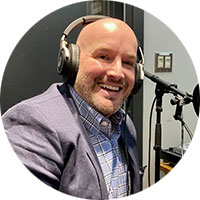 |
Jared Brown Assistant Dean of Academic Affairs at Pottstown Campus |
Produced by
Montco students in the Sound Recording and Music Technology (SRT) Program record, edit and produce the podcasts under the direction of SRT Director David Ivory and technical support of Senior Producer and Technical Support Manager Matt Porter. The podcasts are recorded in Montco's state-of-the-art recording studio, the Mix Room at Montco.
Montco on the Move podcast is free and available to download wherever you listen to your podcasts. Subscribe and share with your friends and family. To suggest guests for future episodes, contact Eric Devlin at [email protected] or Diane VanDyke at [email protected].
Episodes
Read Episode 127 Transcript
Quick Start And Welcome
unknown 0:00
Speaker 1 0:22
Hello, and welcome to the Montco and the Move podcast. I'm Dr. Jared Brown, Assistant Dean of Academic Affairs at Montco's Pottstown Campus. I'm looking forward to today's podcasts as we'll be talking to one of our tutorial services team members. Her name is Dr. Dana Miller, and she is the manager of peer support and outreach here at the college. Dana will talk about some of the free resources and opportunities available for our students through our tutorial services, including 24-7 tutoring and peer support instruction. She'll answer some of the questions she hears most often, and I'm sure share more helpful resources to our Montco community. Welcome, Dana. It's so good to see you. We've worked together on many projects focused on student success, and it's great to have you here in the studio and to learn more about you and your role. So welcome.
Speaker 2 1:18
Thank you. It's my pleasure to be here. Thanks for having me.
Speaker 1 1:20
Before we dive in, who are you? Tell us a little bit about yourself.
Dana’s Path From Teaching To Montco
Speaker 1 1:25
Yeah. So as you said, I'm the manager of peer support and outreach here at Montco, but that was not my first gig. You mean you haven't been doing this for a lifetime?
Speaker 2 1:36
I haven't been doing this for a lifetime. So in my previous life or prior to this, I was a public school teacher, high school, public school teacher, English language arts for 24 years and working on my advanced degree, advanced degrees, and then I was working in higher ed part-time while I was working full-time public school system, and then transitioned to full-time here at Montco just a little over four years ago.
Speaker 1 2:02
But I think that previous history and experience really gives you some advantages because you know what that high school journey looks like. And now that we're in college, what is that supposed to look like? So can you tell us a little bit more about your role at the college?
Peer Tutoring And Who Qualifies
Speaker 1 2:22
Okay, so yeah, in my role I wear a lot of different hats. As we all do.
Speaker 2 2:26
But I love all of them. Yes. Styling all of them. So I basically have four main areas or four main jobs. The first one is I work with our peer tutors. So I more specifically, I recruit, hire, train, and supervise all of our peer tutors. And it is a wonderful job. We have great students. I love seeing them shine and being a support to them on their stepping stone to something bigger and better.
Speaker 1 2:54
So a peer tutor is a current student that is going to assist another current student in navigating a challenging course, per se.
Speaker 2 3:04
That's correct. Yes, yes. And our peer tutors, in order to become a peer tutor, they need to be here for at least one semester and have a cumulative GPA of at least a 3.0 and a B or higher in any course that they wish to tutor. Many of our peer tutors are in the STEM field, so which is a high volume science.
Speaker 1 3:22
And I would think health sciences maybe.
Speaker 2 3:24
Health sciences, absolutely. Absolutely. So I'm happy to work with them. It's great to have them. It's a pleasure to supervise them on a daily basis.
Speaker 1 3:33
I'm sure. So peer tutoring, what is the second aspect about your job and your role here at the college?
Supplemental Instruction For Tough Courses
Speaker 2 3:41
Speaker 1 3:41
Sure. So I also manage our supplemental instruction program. And this is, you were talking about my my experience prior to Montco. This is where I really tap into my experience. My terminal degree is in curriculum and instruction. And so I use a lot of that in working with our supplemental instructors, and I'll talk about that in a minute. But supplemental instruction, just a brief overview of the program. Basically, it supplemental instruction sessions are enhanced group tutoring sessions, and they are facilitated by student leaders. So these students are those who have taken an historically difficult or challenging course in the past, such as Chem 121 or Bio121 or Anatomy and Physiology. Or for me, math.
Speaker 2 4:30
Right. For me as well. And they have been successful. And their the faculty member, the professor, has recommended them for this position.
Speaker 1 4:41
Right. Okay.
Speaker 2 4:42
And so then what happens is once they are interviewed, hired, onboarded, trained, then they go back in and they have a second iteration of the same class with the same professor, but they're there a second time just as an observer and to get to know the students in the class and to hone in on the pain points that the students are having, right?
Speaker 1 5:04
And maybe students speaking to other students.
Speaker 2 5:08
Yes. And they're the walls come down. Yes. Right? And so when our SIs then run their outside sessions, they have two one-hour-long sessions per week outside the regular class time where students in that class can come and meet with them for a collaborative learning time where they have just more iterations of the content. The students have this sense that they can be vulnerable.
Speaker 1 5:34
Yeah.
Speaker 2 5:35
And that's where the magic happens, really.
Speaker 1 5:36
Great. So we covered peer tutoring. Yes. We covered supplemental instruction. That's a lot. That's a lot. So what's next? What's number three?
Speaker 2 5:47
Well, number three sort of rolls into number four, so that's great. But number Yeah, number three is a bit of outreach, but it's the student-facing portion of outreach, and that's called
Peer Navigation And Campus Outreach
Speaker 2 5:57
peer navigation. Peer navigator is another student role, and I am currently actively recruiting students for this role. So a little shameless plug, right?
Speaker 1 6:07
Anyone who wants to work with Dana, sign up.
Speaker 2 6:10
That's right. And so these are students who have used our resources in the past and have found them to be beneficial. So maybe they had a face-to-face tutoring session or multiple or an online session or they went to an open session or they logged in and did an online 24-7 session, or they went to an SI session, right? And they are willing to go into classrooms and talk to other students about the services and how helpful they are. And so that rolls into number four. Number four, which is the other part of my title. So peer support and outreach. And the outreach piece is going in and speaking to faculty and students, a lot of first-year experience classes. And demonstrating how students can use the tools to make an appointment, how they can access the services, right, and all of the benefits that go along with them.
Speaker 1 7:05
What is something you wish a student knew about your work or some of the supports that you offer? What is something you wish students at Montco would know more about or utilize here at college?
24/7 Tutoring Plus Writing Feedback
Speaker 2 7:19
Yeah, and I try really hard to make this known, but I wish they knew how varied our services were because it's not just the traditional tutoring session, you know, sitting across from a table or side by side with a tutor, which we definitely have that, but it's so much more. So much more. So we have our online services 24-7, where because we know that students at Montco going to class is not their only job. They, you know,
Speaker 1 7:50
other gigs.
Speaker 2 7:50
They have uh lots of other gigs, right? Just we're circling right back to the beginning. So yeah, so they they definitely like they might have a part-time job. They might have a full-time job, right?
Speaker 1 7:59
Family commitments.
Speaker 2 8:00
Yeah, all of those things. And you know, playing sports, practices. And so it might be midnight, 1 a.m., 2 a.m., when they're like, oh my goodness, I'm working on my on my assignment or I'm trying to study for for this exam and I have a question. They can log in 24-7 through live help. Absolutely. Absolutely.
Speaker 1 8:19
It's a great resource.
Speaker 2 8:21
And we support nearly 300 different subjects. So that's that and that's just the first piece. They can they have that live help 24-7. They also can make appointments, they can make appointments online with a tutor, a Montco tutor, they can make appointments in person at either the Pottstown or the Blue Bell campus. They can just walk in to the library in South Hall and at Pottstown or the library here in College Hall at Blue Bell. They can also, and this is something that I wish that I had at any stage of my college career, they can also asynchronously submit a paper at any stage of the writing process for any class. It can be just a thesis statement, an outline, a paragraph, or a 10-page paper with their bibliography and works cited page, and have a tutor review that asynchronously. Yeah, feedback within 24 hours. It's like the epitome of multitasking.
Speaker 1 9:15
Beyond just helping with project or a paper or preparing for an exam, you're also giving some crucial skills that are needed to navigate not only college but life, and that's time management, anxiety, preparation. So I just wanted to elaborate that that it's not just those tutoring elements or preparation elements. It's much more that you and your team provide, and I'm so grateful for that. I have two more questions. But before I go into the last question, I want to I want to ask you this.
Time Commitment And Cost To Students
Speaker 1 9:50
Time and money are a valuable thing, right? They're both valuable. How much time would a student spend on average with you all? If you can give me an estimate. And then is there a cost to students?
Speaker 2 10:06
Very good question. So all of our tutoring appointments are one hour. Okay. And we have found that that is an ample amount of time to go through the steps, the effective steps of a tutoring session. It gives time for students to kind of have their mise en place, right? Everything in the in its place, and then go through, you know, what it is that they're actually needing support with, and then have that guided practice, and then a little summarizer and then a takeaway. So that would be the time commitment for each session.
Speaker 1 10:34
Nice.
Speaker 2 10:35
And all of the services are absolutely free.
Speaker 1 10:37
I wanted to stress that.
Speaker 2 10:38
Yes, yes.
Speaker 1 10:39
Because I think sometimes students are like, do I have to pay for this? Not at all. No. If you are a Montco student, you are eligible, and we welcome you to utilize these amazing resources. And that leads into my final question.
How To Access Tutoring In Canvas
Speaker 2 10:52
Sure.
Speaker 1 10:52
If students are interested in working for you or working with you and your team, or more interested in learning more about your resources, where should they go?
Speaker 2 11:03
Well, you can go to mc3.edu backslash tutoring. You can just type in tutoring to Montco Connect or streamlined way to get to us, which I always promote to students, is just go into any Canvas course shell, any one of your Canvas course shells. And we in Tutorial Services, we're honored and privileged to be front and slightly off-center with those radio buttons right there, almost in the middle. Just click on that, and that will take you directly to our website. There's also a link on the side of every single Canvas course shell that says meet with a tutor or librarian. That's your direct access to us.
Speaker 1 11:35
That is awesome. Well, Dr. Dana Miller, it's been a pleasure connecting with you and learning more about you, but also the amazing work that you're doing inside and outside of the classrooms for our students. And I believe that regardless of anyone's academic journey, having additional support on hand is always welcomed and needed. Whether the class is a new class for a student or a challenging course or something that they just want to improve upon, I think that utilizing you and your team is very important. And I appreciate the time and effort and the information that you share today. It's very helpful about our amazing tutorial services here at Montgomery County Community College. So thank you, Dana. Thanks for having me. It's been great.
Speaker 2 12:20
Absolutely. And I would also like to give a special thank you to our Sound and Recording Music Technology alumnus, Quinn Szente, who produced today's show. And thank you again for listening to the Montco on the Move podcast. Check back soon to hear more
Credits And How To Stay Connected
Speaker 2 12:34
stories from our Montco family. Until next time, I'm Dr. Jared Brown, and thanks again for listening.
Speaker 12:40
Thanks for listening to Montco on the Move. Students at Montgomery County Community College working in the sound recording and music technology program, record, edit, and produce this podcast. Check out mc3.edu forward slash on the move to listen to our latest episode or download our podcast on your favorite podcast app. You can also learn about the latest episodes by following us on social media. Have a guest in mind you think would be great for the podcast? Email Eric Devlin at edevlin at mc3.edu or Diane Van Dyke at dvandyke at mc3.edu. And come back next time to find out more about what's happening at your community college and catch our Montco Momentum.
Read Episode 126 Transcript
Welcome And Meet The Guest
Speaker 1 0:20
Hello, and welcome to the Montco on the Move Podcast. I'm Dr. Jared Brown, Assistant Dean of Academic Affairs at Montco's Pottstown campus. I'm looking forward to today's conversation because we'll be talking to the Director of Admissions and Recruitment at the College, Dr. Michael Harcum, who will talk to me about the admissions process, how to enroll at the college, and why Montco is the best place to begin your higher education journey. Welcome, Dr. Harcum. How are ya?
Speaker 2 0:50
Dr. Jared Brown, thank you so much for having me. I am doing well.
Speaker 1 0:54
You know, this is great because usually we see each other at big events, meetings, running around, but now we get to sit down and have some dialogue about the
Dr. Michael Harcum's Path To Higher Ed
Speaker 1 1:05
amazing things that you do here at the College in the community, managing a team, a very outwardly group of individuals to help new and potential Mustangs find their place. So before we get into that, can you tell me a little bit about Dr. Harcum?
Speaker 2 1:24
Sure, absolutely, Jared. Again, thanks so much for just having me. I always wonder when do you get any sleep?
Speaker 1 1:30
Never. Never. Never.
Speaker 2 1:32
But uh a little bit about me. I grew up in the area. I've been working in higher education since the great year of 2008. Prior to working in higher ed, I had a short stint in the classroom. Fun fact, in undergrad, my student teaching was at an all-Amish school. Where I was the first African American person who the student seen outside of a textbook, which was really cool. They got to experience something new, and I had the opportunity to learn more about a culture that I had not grown up with. But I've been at the college here at Montco for nine and a half years, going on 10. Time flies when you are having fun. And, you know, just seeing when you're at an institution for as long as I have been, I mean, when you see students come back afterwards, it is the greatest feeling ever.
Speaker 1 2:14
Yes.
Speaker 2 2:14
You know, and and students, they remember your name and they're not shy to share a story or something that you did to make their experience positive. Student workers, student government members, former athletes, just so many different students. And I tell you what, that feeling, when you know you made an impact and difference, it's uh better than your paycheck sometime. And I don't say that, I mean it.
Speaker 1 2:36
I know you mean it. So when we talk about admissions, what can you tell me about the process for students who are interested
Open Access Admissions And The Checklist
Speaker 1 2:45
or are currently applying to the college? So what is the process?
Speaker 2 2:50
Absolutely. So at Montco, we are an open access school, which means if you are motivated to have a will, to want to learn and to be part of our herd, our community, then we're happy to have you. So our students, they're provided with a new student checklist, which consists of uh a few good amount of steps, the application for admissions, which has no charge, transcripts, um, some ID verification processes, you know, steps that students can get hands-on support with. Some students we give these steps to and they're able to go from A to Z with no problem. But if these students, and many of them are anything like me, it's your first time doing some real life paperwork, right?
Speaker 1 3:27
Yeah.
Speaker 2 3:27
Yeah, so they might run into some challenges and our team as well as colleagues at the college, such as enrollment services, we're here to hand hold and try to make the process as seamless as possible. We do events every single week. And I tell you what, I'm excited that my team, you kind of alluded to them earlier, the team that I manage. We love our students so much that if they can't come here, we even meet them where they are at their physical high school, whatever it is to help students remove barriers.
Speaker 1 3:52
That's great. How early should students start applying before a semester?
Speaker 2 3:57
So I love our colleagues at the college and academic affairs and the registrar's office because we open up our registration process, you know, sometimes four, five, six, six months prior to the actual start, which gives students plenty of time. So a good rule of thumb not to be just overly broad is to do everything as early as possible.
Speaker 1 4:16
Please.
Speaker 2 4:17
Please. Oftentimes, the way we just ha shared that laugh. Oftentimes when I am in front of parents, prospective students, community members, it's usually in really fun and happy environments, right? And I'm quick to remind them that I appreciate their smiles, but if they wait until the last minute to enroll, I'm very confident they might not be smiling that much when the lines start getting long.
Speaker 1 4:41
Courses fill up.
Speaker 2 4:42
Courses fill up, all of those type things. So the earlier the better. I will just put a little caveat in. If a person is a high school senior and you're a health sciences major, it's probably ideal to wait until you get your final transcript.
Speaker 1 4:57
Transcript. Interesting.
Speaker 2 4:57
Yeah, that final transcript. Take one extra step. And and you know, for fall, rule of thumb, try to get things done before the second week of July. Do not wait until August.
Speaker 1 5:06
That's a good idea. That's a good idea. That's a good marker. Why is Montco the place you should start to get your education or to get certification to go out into the workforce or what have you? So why should all potential students start here at Montco?
Speaker 2 5:23
Let me tell you, Dr. Jared Brown, I love this question so, so much. And I'll personalize it really quick. I often tell families and students that if I knew what I knew way back, I'm not going to say how many years ago, when I first went to college, I would have considered a local community college and then a four-year school, but I went straight to a four-year school. If I would have done it in steps, I'd still be working where I'm working today. Same salary. Right. I would have saved to the tune of about $48,000.
Speaker 1 5:53
I know, I know.
Speaker 2 5:55
You see some of the price tags on some schools these days, what was $48,000 for me, would be a lot for some other students, depending on what institution you're looking at. So first thing I would say is affordability, right?
Speaker 1 6:06
Absolutely.
Speaker 2 6:07
And then the culture. The culture here at Montco, it's really unique. It's really unique. I've seen students help each other out. I've seen students forge relationships with faculty members and with administrators,
Speaker 1 6:20
academic advisors.
Speaker 2 6:22
Academic advisors, you name it, where, you know, they say they really feel like they're part of a community. I've seen some of our students refer to my colleagues and
When To Apply So Classes Don’t Fill
Speaker 2 6:30
even myself sometimes as extended family members. And I don't know what other kind of title is really higher than that from a student, someone who's really not a family member, at least not by blood. So, you know, I'm just grateful for that and all that Montco has to offer. And I think that when students come here and they immerse themselves and the different things that we have going on, that more than than than more than most will definitely feel that same way.
Speaker 1 6:55
When I have the opportunity to speak with potential students or accepted students or deposited students and their families at an admission event, uh they will always say they're choosing Montco because it's close, it's affordable, and the flexibility of time, but then you also hit on the idea of community, and I also think that our resources are top-notch.
Speaker 2 7:23
I agree.
Speaker 1 7:24
And so you're getting all of that to really set anyone up for success, and I think everyone should consider it.
Speaker 2 7:34
I totally agree. I'm gonna bring you in some more events with us, Jared.
Speaker 1 7:38
Maybe, maybe. We'll see. So what do students like the most about Montco? What are you hearing? What's the word on the street?
Speaker 2 7:46
You just made my job easy by asking me that question because you sort of answered it in your own, just uh in a previous comment. The resources.
Speaker 1 7:53
Yeah.
Speaker 2 7:54
The resources. The resources. Yeah. Rather it's resources to help pay for school, right? Applying for federal financial aid, different grants, even some of the new opportunities like the PA Grow Grant, which is for Pennsylvania residents who go to Pennsylvania schools of in-demand fields, right? Tutoring. I mean, you know, 24-7 online or even in person. So whichever way you learn, we meet you halfway.
Speaker 1 8:18
Our librarians are so resourceful too.
Speaker 2 8:21
Wellness.
Speaker 1 8:21
I mean, yeah, our Wellness Center, all of it, yeah. I I think there's so many to list. And I think that the troubling thing for me is students might not be aware that they have access or that they should when they probably should access some of our resources. So yeah, it's very important. And I've actually heard from students that graduated with their associates from us, went to a four-year institution, and they've said, I wish I could go back to Montco.
Speaker 2 8:55
Right.
Speaker 1 8:56
And finish my degree, finish a four-year degree in Montco because I had such a great experience. And I think that's telling. I think that's those students take advantage of what we have to offer.
Speaker 2 9:07
Yes, sir. Yes, sir.
Speaker 1 9:08
So our student population looks a little different. We have students of all ages, time frames, socioeconomic, start-stop. If a student is an adult learner or not your traditional 18-year-old student, talk to me about what those populations of students in their journey can expect here at the College. Or what they should do.
Speaker 2 9:35
Yeah, no, I'm going to tackle that in both ways. What they can expect here, again, is that community fill resources that are catered specifically for them. I mean, I've seen
Why Montco Wins On Value
Speaker 2 9:45
adult learners take advantage of things such as CLEP, where you could take an exam and earn credit rather than actually taking the actual course, right? I've seen students, adult learner students that are non-traditionals get get credit for their prior learning.
Speaker 1 9:58
Yeah, prior learning assessment. Yeah.
Speaker 2 10:01
You know, as an adult learner, I think me and you both will qualify as such, right?
Speaker 1 10:05
Yes.
Speaker 2 10:05
Um something something that we have in common with our non-adult learners is that we like instant gratification, right?
Speaker 1 10:14
We're a little type A.
Speaker 2 10:15
We're a little type A.
Speaker 1 10:16
Yes.
Speaker 2 10:16
And one of the reasons why the adult learner appreciates instant gratification is because many of them are busy, right? We have real life responsibilities. We need flexibility. We got these things called bills, right? So we do need right now solutions. If if we can speed up the process and we're thinking about going back to school, CLEP, PLA, we definitely need to get our adult learners connected with those type of things. If they've experienced college at any other universities or institutions, might be some transfer opportunities. But the non-adult learner, they like answer gratification because they they grew up with AI and all the technology and stuff. So we do got things in common.
Speaker 1 10:49
I also think about the adult learner that one of the barriers for them might be technology. But I have to say that our help desk, our IT folks are amazing. And even our learning management tool, Canvas, that we use, it's quite simple to use once you get into it. So I think if there's a student that's like, I don't know with technology, I haven't used a computer in a while. Just know that there are resources here. And even when you get into our learning management systems, it will be easier than you think to navigate.
Speaker 2 11:22
No, I agree. And just on that comment before you move, I even love and appreciate what the College does for our um our retirement community.
Speaker 1 11:30
Yeah.
Speaker 2 11:31
Being able to audit classes and
Speaker 1 11:32
I know they can take all those classes, yeah.
Speaker 2 11:35
Imagine taking a French course before you travel to France. Oula, oui oui, c'est la vie, you know? It's pretty cool. Pretty cool.
Speaker 1 11:43
Okay. Well, so let's talk about our campuses, both at Pottstown and Blue Bell. The majority of our students are commuting to go to work, come take classes. What suggestions do you have for those students that are busy? They have busy schedules, but they're trying to fulfill their educational requirements. What suggestions do you have for them to really get the most out of their Montco experience?
Speaker 2 12:11
Absolutely. So um a couple things. When I'm connected with students who have really busy lives going on, um I've seen that they found value
Adult Learners Credits Flexibility And Tech
Speaker 2 12:20
with mixing in maybe some online courses where you can take some classes from the convenience of your home, synchronous or even asynchronous, right? And I've seen some students get really flexible where maybe they qualify for financial aid and are eligible for the federal work study program, right? A lot of people are super busy because maybe they're working a job or doing something to make income, right? That's a great way in between your classes to make some extra income and prevent you from having to go to and from campus and also get connected and be mentored by whatever department you're working in. So those are some methods, if possible. I love when students are able to get involved in our 30-plus student-led organizations.
Speaker 1 12:57
Yes, please.
Speaker 2 12:58
The chess club students, uh, Dr. Brown, they used to say, hey, Dr. Harcum, play me in chess, and I'd be like, no, because you might beat me and remind me for the next two years that you beat me in chess. So I I kind of go the other way, right? But no, it's great to see our students just getting involved. And I would also just say this that if a student does find themselves running into difficulty, if it's with time management or or any topic that's on their heart, I do recommend that they share it with someone.
Speaker 1 13:25
Yeah.
Speaker 2 13:26
A lot of my colleagues, Dr. Brown, and and I've seen you directly be super helpful to students. I mean, just so many colleagues. If if students are able to feel comfortable and to share what they have going on, I feel that I don't feel I've seen and know that our colleagues here will help if they're empowered to do so or at minimum point the student in the right direction and get a resource that might make their experience more positive.
Speaker 1 13:48
I totally agree. I totally agree with you. So, Dr. Harcum, I'm a prospective student considering Montco. And I'm interested in learning more. Where should I go? What's my first step? Where should I go?
Speaker 2 14:02
Absolutely. So the very first thing that I would recommend is that you visit mc3.edu forward slash admissions events. It's all one word, admissions events, and you will see that my associate director, Catherine, does a great job with building weekly campus tours.
Speaker 1 14:21
I know, you can just drop in, it's great.
Speaker 2 14:23
Yeppers, and they're great, and you'll get an opportunity to to see the campus for yourself, to connect with admissions colleagues, to get help with the admissions process if needed. And you might get lucky on your tour and run into a Dr. Jared Brown or Matt Porter or someone around campus to make that good connection. So that's my first recommendation for sure.
Speaker 1 14:42
Right. And if I have additional questions, where can I email? What can I do? Who can I chat with?
Speaker 2 14:50
Because I knew that this podcast was run by the Dr. Jared Brown, um I brought some VIP resources that we can share, okay? So the first one I would say is that, you know, send an email to the admissions inbox. It's admissions at mc3.edu.
Speaker 1 15:08
Pretty easy.
Speaker 2 15:09
Pretty easy, right? And I have a dedicated team that if they receive something, they'll fill the answer and get it squared away right then and there. But if it's something that's maybe might not be in our corridor per se, we will get it in the right direction.
Speaker 1 15:21
Nice.
Speaker 2 15:21
And then this next one's really good too, uh Jared. If a student's working on the admissions process or they need to connect with a member of our student services
Where To Start Tours Email And Chat
Speaker 2 15:30
team, they can do so directly from the convenience of their home via Zoom by visiting mc3.edu forward slash SSRC minus sign C H A T. It sounds complicated because it's a VIP link and I spelled it out the long way, but it's mc3.edu forward slash SSRC minus sign chat that connects you to the student resource center via Zoom, and those folks are really good and helpful as well.
Speaker 1 15:59
Well, Dr. Harcum, thank you so much for all that you do, your leadership within the Admissions team, and how you represent the mighty Mustangs out in the community and the local high schools, businesses, and beyond. We really appreciate your work. And I also have to put a plug out for anyone listening, be on the lookout for our amazing admission open houses. We offer those in the fall and the spring, and they are great events to really learn more about the College and most importantly, be connected to someone like Dr. Michael Harcum. So I encourage anyone to do that. We really appreciate your time of sharing with us the admissions process and how beneficial it is to start here at the college, and thank you again.
Speaker 2 16:45
Woo!
Speaker 1 16:48
I would also like to send a special thank you to our Sound and Recording Music Technology alumnus, Mr. Quinn Szente, who produced today's show, thank you, Quinn. And thank you for listening to the Montco and the Move podcast. Check back soon to hear more stories from our Montco family. Until next time, I'm Dr. Jared Brown. Thanks again for listening. Thanks for listening to Montco on the Move. Students at Montgomery County Community College working in the Sound Recording and Music Technology program, record, edit, and produce this podcast. Check out mc3.edu forward slash on the move to listen to our latest episode or download our podcast on your favorite podcast app. You can also learn about the latest episodes by following us on social media. Have a guest in mind you think would be great for the podcast? Email Eric Devlin at edevlin at mc3.edu or Diane Van Dyke at dvandyke at mc3.edu. And come back next time to find out more about what's happening at your community college and catch our Montco Momentum.
Read Episode 125 Transcript
Welcome And Guest Introduction
Speaker 1 0:21
Hello, and welcome to the Montco and the Move podcast. I'm Dr. Jared Brown, Assistant Dean of Academic Affairs at Montco's Pottstown Campus. I'm looking forward to today's podcast as we'll be talking to the director of Montco's Massage Therapy Program, Bill Mullen. Bill will talk about what students learn, the student massage clinic available on campus, community events, and how you can get involved with the program. Bill, welcome.
Speaker 2 0:50
Thank you so much. It's great to be here.
Speaker 1 0:51
How are you?
Speaker 2 0:52
I'm doing well today.
Speaker 1 0:53
That's great. So we're gonna start with a very simple, easy question.
Speaker 2 0:57
Sure.
Speaker 1 0:58
Briefly tell us who you are.
Speaker 2 0:59
Sure. That's pretty simple. So as you said, I'm in charge of the massage therapy program here at the College. I have been a massage therapist now for 22 years. I cannot believe it's been that long. It's been an amazing journey. And I've been teaching and working in massage therapy education for about the past 18 years, nine of those being here at Montco.
Speaker 1 1:18
That is awesome. So let's talk about the massage therapy program.
Where The Program Lives
Speaker 1 1:23
Where is it located? How can students learn more about it? Sure.
Speaker 2 1:28
Sure. So we are here on the Blue Bell campus. The massage program runs from the Health Sciences Center. That is where our classroom and our massage therapy lab slash clinic is. People that are interested in the program can visit the College's website right on the massage therapy page, which is mc3.edu slash massage. From there, there's basic information about the program, upcoming start dates, but most importantly is links to our virtual information sessions. So there students can find out information on when I'll be holding those, which I do monthly, so that prospective students can come in and learn about the program. There's also an area on that page to request information. So simple form, they submit it right through the website, and that comes to me, and I can contact them whichever way they prefer, whether that's a phone call, email, or setting up a Zoom conversation one-on-one.
Skills Students Learn From Day One
Speaker 1 2:13
I'm a new student in your program. What will I learn?
Speaker 2 2:16
A lot. So the program is designed, it's a 600-clock hour program, is required by the State Board of Massage Therapy. So it's an entry-level program with a little bit of advanced therapies in it. So our students start out with their core Swedish massage. So just learning how to do a basic routine around the table. That also includes body mechanics. So it's utilizing leverage and leaning so that we're not overusing our arms and hands. That is a large portion of the program. That's how we actually have, you know, longevity in our careers. Once that's done, we move into advanced massage techniques. So medical massage or clinical massage, working with people who have injuries or an illness that we're working specifically to benefit from, including stretching, trigger point therapy from there, as well as advanced techniques from that. We move into then the spa techniques class. So our students will learn aromatherapy, hot stone massage. One of the benefits of having our clinic on campus is that there's two rooms that are wet rooms, not specifically wet rooms, but they have showers and sinks. So our students are getting the experience of learning how to do body scrubs and wraps as well as part of the program. Working with special populations, so geriatric clients, elderly clients, prenatal clients as well. And full human anatomy and physiology.
Speaker 1 3:27
Of course. You better know it, right?
Speaker 2 3:28
Yes. Inside and out, every muscle of the body as well.
Speaker 1 3:31
Great. What are some other topics that you discuss in the program to really prepare students to be active massage therapists in the community?
Business Training And Employer Insights
Speaker 1 3:41
Speaker 2 3:41
One of the modules in the program is our business portion of the class. Very nice. So a lot of our students like to go into business for themselves, maybe not full-time, but we all end up doing some things on our own. So we discuss and go over how to do that legally. What does that look like to, you know, from securing space, zoning, as well as, you know, people who maybe want to work from home, how to do that as well, you know, checking with the township, marketing, financials, startup cost. The other portion of that program is employment. What does a massage therapy job look like? And what does a massage therapy interview look like? And how to prepare for that because it is a little different than going out into corporate America, saying accountants. You know, part of that is giving a massage. So how to be prepared and ready to do that as part of the interview.
Speaker 1 4:23
I also know that through our conversations, you'll actually have business owners come in and talk to the students about if they own a spa or a clinic or something like that where they're hiring massage therapists. And I really appreciate that you bring those business owners in to have that real hands-on experience with the students. I think that's great.
Speaker 2 4:46
It's an amazing thing. We have so many employer partners that will come in. Whenever employers are looking for prospective employees, obviously, they will contact the school. They, you know, the 10 with massage therapy go right directly to the school. So when that happens, I do invite them in because I want the students to know what type of job market is out there, because there's a wide variety of places that we can go to work. So whenever I can get an employer or an owner to come in from a business, it's just not to recruit, but it's also to explain how they got where they are, especially if it's an independent massage clinic or spa, how they got there to give our students that insight, which is, you know, great for them.
Scheduling Options And Clinic Hours
Speaker 2 5:22
Speaker 1 5:22
So you mentioned it will take about 600 hours. Can you provide a little bit more information of what that entails? Is that classroom time? Is that clinic? Is that hours on the table? Like what does that entail for a student?
Speaker 2 5:37
So it's both. It's hours in the classroom and hours in the clinic. Okay. So our program is offered in two different formats. We have a full-time format which runs six months. So we start our full-time program every September and every March, and that's class Monday through Friday. Students are in class Monday through Friday. Monday through Thursday, they're in from nine to two. Fridays are nine to one. Wow. Yes. And then our evening class, that's a part-time program. We offer that once per year. Generally, that starts in the fall. And students are in class two to three nights a week from five to ten. Okay. And as well as part of that is our student clinic. It's outside of our normal class time. We can get into talking about what the clinic entails, but where the students are getting firsthand experience working on clients.
MBLEx Exam And Strong Pass Rates
Speaker 1 6:17
So once they get through those hours, they have to sit for a state exam. Is that correct?
Speaker 2 6:21
Correct. Our students take the MLEX exam, which is adopted by the state of Pennsylvania for Relationship. And what is our percentage of success rate? We have a percentage pass rate of the 90th in the 90th percentile for first-time test takers. That is awesome. Compared to what? State average is about 67% in the case.
Speaker 1 6:40
Oh, we're rocking it here. At Montco. Come on. I've completed the hours. I've successfully passed the exam.
Where Graduates Get Hired
Speaker 1 6:48
Where am I going to go work? Where are some popular places that you've seen graduates of the program go and work in the workforce?
Speaker 2 6:56
We have graduates in a variety of things. So obviously massage therapy clinics, franchise clinics, Massage Envys, Hand and Stones, places like that. We have former students that are in gyms, in hotels, spas, med spas, therapists that work for organizations they travel as well. And we recently, and I'm very excited over this, one of our graduates recently started working with Children's Hospital Philadelphia. He was hired. He is now licensed in Pennsylvania and New Jersey, and he travels to outpatient clinics, primarily working with pediatric oncology patients.
Speaker 1 7:28
Oh, how awesome.
Speaker 2 7:29
It's amazing. It's amazing. It's the first time that I saw that Children's Hospital was hiring.
Speaker 1 7:33
Yeah.
Speaker 2 7:34
And the fact that one of our graduates was able to secure that position, and I know he's doing amazing with these kids.
Speaker 1 7:40
That is so awesome.
Community Events And Service Work
Speaker 1 7:41
Community is very important here at the College. How are you, the students or the program, involved with community events? Can you highlight some of those things?
Speaker 2 7:50
We love community events. Massage therapy seems to be one of the things that people love to invite out. So we do throughout the course of a year, I could lose count of how many events that we do. So we do a lot of senior citizens' fairs with a lot of our local state representatives and state senators. Two of our big events, one we just started doing a few years ago, it's called Night to Shine. And it's through the Tim Tebow Foundation. So we volunteer with the event at Emmanuel Ladies Church in Souderton. And what Night to Shine is, is it a prom-like event for people with special needs who are age 14 years or older. So part of that event is they get their hair done, makeup, limo rides, all of that stuff. We're on site, we're in the respite area, which is a separate area, and that's for families and caregivers. Because when you have a person in your family who you're caring for, you generally don't get a lot of time to yourself. So they get a special night too.
Speaker 1 8:40
Oh, that's great.
Speaker 2 8:40
So we get to spend the time offering chair massages as part of this respite area. And this past year we did over 90 massages. Our students completed 90 massages. Different events in the community that are wonderful for us to do are, you know, something outside the norm. One of the other events that we do is that we work with Lori Schreiber, who is the clerk of courts for Montgomery County. In April, she runs a fair, it's the Second Chance Resource Fair. And it's for people who have been affected by the criminal justice system. So there's resources on hand for them to come out, expungement clinics and things like that. So we're there offering chair massages, promoting, you know, the campus and the college, as well as just the benefits of massage therapy.
Speaker 1 9:18
That is awesome.
Info Sessions And Booking The Clinic
Speaker 1 9:19
Bill, I've learned so much from our conversation, but I want you to highlight again if I have an interest or I haven't thought about this as a future career, where can I go? Can you remind us where can I go to find out more information?
Speaker 2 9:36
Sure. They can come to Montco's website, so go to mc3.edu forward slash massage. That will take you right to the massage therapy page with upcoming dates. Primarily on there will be links to my monthly information sessions. They are virtual. I am happy to schedule one-on-one appointments. I love when prospective students want to come out and see our area and tour the massage therapy area. Also on that page is a link you'll see to make an appointment in our student massage clinic where we are open to the public, where we offer 60 and 90 minute massage sessions at a discounted rate that people can come in and it gives the students firsthand experience again of working in the massage therapy field.
Speaker 1 10:12
Bill, thank you so much for being so dedicated to our students, this program, and really contributing to the greater community. I know that you're doing great things and the students are well prepared after they complete their required hours and they sit for their exam and they go out into the community. So I can't thank you enough for sharing more about your program and how you really see this as a vital option for students looking to make a difference in someone's life. I think it's awesome.
Speaker 2 10:41
Yes. Thank you so much. I'm excited to have been here and got to talk to you and everyone.
Speaker 1 10:45
Yeah, we really appreciate your time and for you telling your Montco story here today.
Thanks, Credits, And How To Connect
Speaker 1 10:52
I would also like to send a special thank you to our Sound and Recording Music Technology alumnus, Mr. Quinn Szente, who produced today's show. And thank you again for listening to the Montco on the Move podcast. Check back soon to hear more stories from our Montco family. Until next time, I'm Jared Brown. Thanks again for listening.
Speaker 11:10
Thanks for listening to Mako on the Move. Students at Montgomery County Community College working in the Sound Recording and Music Technology Program, record, edit, and produce this podcast. Check out mc3.edu forward slash on the move to listen to our latest episode or download our podcast on your favorite podcast app. You can also learn about the latest episodes by following us on social media. Have a guest in mind you think would be great for the podcast? Email Eric Devlin at edevlin at mc3.edu or Diane Van Dyke at dvandyke at mc3.edu. And come back next time to find out more about what's happening at your community college and catch our Montco Momentum.
Read Episode 124 Transcript
Speaker 1: 00:23
Hello, and welcome to the Montco and the Move podcast. I'm Dr. Jared Brown, Assistant
Dean of Academic Affairs at Montco's Pottstown Campus. If you've ever seen an Action
News van drive by, you may have seen today's guest. He is a 2000 alumnus and works
as a video journalist at 6 ABC. His name is Mike Niklauski, and he is going to tell
us his Montco story. He'll talk about his experience as a student and what's now the
Mass Media Production Department and the skills that he acquired as a student that
he still uses today in the newsroom. Welcome, welcome back.
Speaker 2: 01:00
Appreciate you having me.
Speaker 1: 01:01
How are you doing?
Speaker 2: 01:02
I'm fantastic. I'm not working, so it's great.
Speaker 1: 01:05
I'm sure, I'm sure. So when you step onto Montco's campus today, what do you think?
Before I get into like more about who you are, just that feel of being back here.
Speaker 2: 01:15
I remember when I first stepped on campus and it actually feels like a a small, normal
school, if that makes any sense. I mean I didn't I didn't get the sense that I was
at a community college. It actually felt like a a small college. So when I step on
now, I mean it brings me back to the first time.
Speaker 1: 01:34
That's awesome.
Speaker 1: 01:35
So tell us a little bit about yourself.
Speaker 2: 01:37
Okay.
Speaker 1: 01:38
And then I want to learn more about that Montco journey. So who are you? Where are
you from?
Speaker 2: 01:44
So I grew up in Philadelphia. I grew up in Frankfurt. Being in the Frankfurt area,
I always saw news vans, if that makes sense. Yeah. So that kind of brought me into
the the TV interest. But now I live in Valley Forge, Phoenixville area. Two kids,
beautiful wife, everyone's great. My daughter's going into her senior year, my son's
going into his freshman year. Yeah, everything's good. I love what I do for work and
I got a great family, so I can't complain.
Speaker 1: 02:10
So you attended the college in 2000.
Speaker 2: 02:12
I did.
Speaker 1: 02:13
What program were you in at the time?
Speaker 2: 02:15
So at the time, I believe it was called pr either production or broadcast journalism.
I I actually don't remember. But I I came here mainly for the gen eds that I knew
would either transfer to Temple or Kutztown. They were my two top choices for TV.
Speaker 1: 02:32
Yeah.
Speaker 2: 02:32
So
Speaker 2: 02:32
when I met with you know the guidance counselor over at the main hall, you know,
we went over courses and I knew I could get my hands on the equipment here. So that
was one of the key factors that I was like, all right, this is gonna work. You know,
I I was kind of paying on my own, so I didn't really have any, you know, financial
aid. So I knew this was kind of a good start for me to take that leap.
Speaker 1: 02:52
So you mentioned you saw these news vans all around and you're like, hmm, maybe that
could be a future for me. Was TV news always something that you wanted to do from
a young age?
Speaker 2: 03:02
It was. So it's funny. Probably when I was eight, nine, or ten, I witnessed an accident
when I was leaving grade school. Hmm and it ended up being a fatal accident. And,
you know, I just kind of walked over and I saw the news cameras over there. I went
home. Something just wanted me to go back to the scene, which was probably two miles
away. Wow. My parents didn't know that I left the house, drove my bike back up to
the scene, ended up getting interviewed by one of my future colleagues. Wow. When
I was nine years old. Vernon Odom interviewed me for a story, and I ended up working
with them probably 30 years later. It was unbelievable.
Speaker 1: 03:41
That's amazing how sometimes life can just set you on a course, and here you are.
So you mentioned a little bit about being at Montco and that experience about being
in college. What else was the
Speaker 1: 03:54
appeal about attending Montco?
Speaker 2: 03:57
It was close enough for me at the time I was living in Willow Grove. So it was only
a half-hour drive. So the the proximity was big for me. And again, I didn't feel like
I was at a community college. It just felt good to me when I came here.
Speaker 1: 04:09
So it was location, it was gonna help you prepare for the transition to a four-year,
and you mentioned
Speaker 2: 04:15
the affordability actually was great.
Speaker 1: 04:20
And and we'll dive into this a little bit because I want your perspective about what
you're seeing now in 2026. But when you got to college, what were some of the things
that you were involved in?
Speaker 2: 04:31
We would do, you know, TV news programs here. That was kind of the only thing I did
while here. And we would go out and you know shoot our own projects for certain classes.
We would create short films, which would be a few minutes long, and we would have
to go beginning through end and end up almost with a short film probably five to ten
minutes long.
Speaker 1: 04:48
Yeah.
Speaker 2: 04:48
That ended up being fun because I met new people that I didn't know.
Speaker 1: 04:51
Yeah.
Speaker 2: 04:52
And we kind of blend it. We would meet on a weekly basis and we would hang out and
have a drink or two and just kind of do our thing and then just go about our way.
That was kind of the only, I guess, outside of normal school stuff that I did here.
But it was it was one of the things I I had fun with.
Speaker 1: 05:06
That's awesome. Was there a class or professor at the time that really impacted you
or you have a fond memory about?
Speaker 2: 05:12
Honestly, I can't remember what I ate last week. So I a professor's name, I'd be lying
if I said I remembered. I do remember Matt Porter, who I just ran into outside of
the studio here. And it's fun, every time I run into him, it's like we don't miss
a beat. And he was here when I was here back, you know, 26 years ago. But he's one
of the faces I do remember. And you know, we would bounce ideas off each other even
back then just to try and learn some new things.
Speaker 1: 05:36
As you walk the ATC and you look in
Speaker 2: 05:40
the Sound Recording and Music Technology, some of our production space and technology
equipment.
Speaker 2: 05:48
I'm jealous because we did not have any of this stuff. Uh in fact, our equipment room
was a quarter the size of this room right here.
Speaker 1: 05:56
Yeah.
Speaker 2: 05:56
And we would jam everything in there. We didn't have a studio. We would have to, you
know, find locations on campus to shoot our things on. You guys have a beautiful facility.
I mean, I see audio mixing rooms, I see studios.
Speaker 1: 06:09
Oh yeah.
Speaker 2: 06:09
You know what? I was just up Penn State last month, you know, visiting for my daughter,
and their studio is a little bit bigger than this, but this is eerily similar to the
quality of studios that they have, which is saying a lot because again, this is a
community college. This isn't Penn State where 50,000 kids go. When I walk through
here, I'm jealous because I didn't have this stuff, but this is actually great for
the students who who do attend.
Speaker 1: 06:34
I really appreciate those comments and I like asking former students when they see
how innovative Montco continues to be. And they will share with me some of the equipment
that they work on for their professional job is not up to par as what students are
working on and get their hands on here at Montco. So I'm glad that you
Speaker 1: 06:56
recognize that as well. So your time at Montco, what are some identifiable skills
that you acquired here that has really helped you in your career, your job, that really
laid that foundation for who you are as a professional?
Speaker 2: 07:10
So this is a melting pot. You know, you have people from all over Montgomery County
come to this campus. I kind of was used to that already, but it actually did help
me, you know, see people from different backgrounds, ethnicities, everything like
that. You know, this isn't dominated by one group or one religion or anything like
that. Is this was actually a great spot for me to meet new people and you know, just
kind of get used to that.
Speaker 1: 07:33
So you completed your time at Montco, you had that good foundation, and then you transferred
like many of our students. Some go into the workforce, but some decide to transfer
to a four-year and complete their degree. Can you talk a little bit about that?
Speaker 2: 07:47
Yeah. So I transferred to Kutztown University. One of the original options for me
was Temple, but because I grew up in Philly, I kind of wanted to experience something
new. So Kutztown had a great program. They had, you know, electronic media at the
time, and it was an hour away from where I lived at the time. So it was a great fit
for me. I knew some people that were going up there. They again, I got to get my hands
on the equipment up there, which helped me a ton. And I would tell any student who's
here now get your hands on anything you can, learn from anything and anyone you can,
because you're never gonna know everything. So always take it as a learning experience.
Speaker 1: 08:26
Great advice.
Speaker 2: 08:27
Any advice someone gives you, take it.
Speaker 1: 08:29
Yeah.
Speaker 2: 08:30
You're you're never gonna be full. I uh it sounds corny, but uh honestly, that's really
how I was here. So I took everything in and I took every bit of advice that someone
gave me.
Speaker 1: 08:39
So from that nine-year-old boy being interviewed and being like, hmm, I might be able
to do this. Yeah. And then working, graduating high school, going to Montco, finishing
at Montco, going to Kutztown, and then you finish at Kutztown.
Speaker 1: 08:53
What was the first job?
Speaker 2: 08:54
So it's funny. TV is not an easy job to get. So actually, my first year out of college,
I was a trash man.
Speaker 1: 09:04
Oh, interesting. Okay.
Speaker 2: 09:05
Because it paid the bills. I needed money.
Speaker 1: 09:07
Right.
Speaker 2: 09:08
I was applying to 30 different jobs at the time. I wanted to be a sports reporter
or a sports anchor.
Speaker 1: 09:12
Yeah.
Speaker 2: 09:13
I guess they didn't like my Philly accent. So because I I applied to probably 30 different
states.
Speaker 1: 09:18
Wow.
Speaker 2: 09:18
I probably sent out 50 resumes, 50 tapes at the time, you know, we would send out
production tapes of my work. Didn't get any bites, and I would do follow-ups. So at
the time I w I worked as a trash man, I worked as a fence installing guy, I worked
at a stockbroker's office, I did anything I could. And then one day I had my police
academy paperwork filled out and stamped in an envelope in my passenger's seat of
my car. I was on my way to the post office to drop it off and my first TV station
called.
Speaker 1: 09:45
Wow.
Speaker 2: 09:46
Channel 17 in Philly. And they brought me in as an editor part-time, and that was
my first introduction, probably a year out of school. It's crazy.
Speaker 1: 09:56
But you know, persistence. Yeah. You know, having that persistence in this field,
I think, is another good lesson, is like don't give up, keep beating the drum, keep
making those connections. It's so important. So now you're working at 6 ABC. What's
that like?
Speaker 2: 10:12
It's amazing. I mean, it's probably the top three TV station in the country for news.
Viewers, you know, we get millions of viewers a day. We're still number one in Philadelphia.
I don't like to brag, but we dominate the Philly market for TV news. When something
big happens, people turn it on.
Speaker 1: 10:30
Yeah.
Speaker 2: 10:31
That's what I grew up on. So that was kind of my goal to work at Action News. And
it ended up coming back. I turned down jobs in other states when I was ready to make
a big move when I knew I was ready,
Speaker 2: 10:42
coming from my last station in Harrisburg. And Action News came calling and I knew
Speaker 1: 10:48
this is where you needed to be.
Speaker 2: 10:49
This this was my spot. This is where I always wanted to be. I was going to be back
home. Because at the time I was living in Lancaster at my other job, and it brought
me home. And it's full circle. It was my goal, and it ended up coming back.
Speaker 1: 11:02
So for our students that perhaps want to follow in your footsteps, can you share what
a typical day is like?
Speaker 2: 11:09
I don't know what a typical day is like. People ask me, what are you doing tomorrow?
I honestly have no clue.
Speaker 1: 11:14
You don't know.
Speaker 2: 11:15
I could know at 10 o'clock in the morning when I first get in, they'll be like, hey,
you're doing this or that. And an hour later, everything changes, something breaks.
Speaker 1: 11:23
Right.
Speaker 2: 11:23
Breaking news happens. I honestly don't know what to expect every day, and that's
why I love my job. Because it's I don't get bored. I'm never going to get bored with
my job. I I could do news one day, I could do sports one day, I could cover a homicide
one day, I could cover a fire, I could cover the Eagles one day. I have no idea what
I'm doing day to day.
Speaker 1: 11:41
So flexibility and adaptability is key to being successful in your field.
Speaker 2: 11:45
Yeah, but I'm never bored.
Speaker 1: 11:46
Never bored.
Speaker 2: 11:47
It's great.
Speaker 1: 11:48
If a student walked up to you from Montco and said, What do I need to do?
Speaker 2: 11:52
Grind.
Speaker 1: 11:53
To get to where you're at.
Speaker 2: 11:54
Grind. Honestly, everyone says it. I mean, if you don't want to put the time and effort
in, it's not going to happen. To me, laziness is a huge turnoff. So for me, my dad
always taught me, if you really want to do what you want to do, you got to work at
it.
Speaker 1: 12:10
Yeah.
Speaker 2: 12:10
And that's how I grew up. Anything, sports, grades for school, and now my job. Again,
this sounds corny, but grind. I tell students all the time when I meet with them,
you know, if you really want to do it, go for it. Nobody else is going to root for
you as much as you are. So if you really want to do it, do it.
Speaker 1: 12:28
And it just doesn't get handed to you.
Speaker 2: 12:30
No. No. And that's the problem with young kids nowadays. They expect everything handed
to them, and that's not how it works. I mean, a manager is going to look at you. Who
do you think they're going to choose? Someone who wants everything given to them or
someone who actually works for it?
Speaker 1: 12:44
Yeah.
Speaker 1: 12:44
Well, I will tell you, I, from my experience being here at Montco, our students work
very hard to balance life, commitment outside the classroom, but also the gratitude
that I hear from students, like I am so grateful to be here and have the faculty,
the staff, and the equipment to one day want to do what I want to do. So I'm glad
that you're giving that advice.
Speaker 2: 13:10
Yeah. I mean, the few times I've been here and run into students, these students,
they really like what they do.
Speaker 1: 13:15
They do.
Speaker 2: 13:16
You know, they're not lazy.
Speaker 1: 13:17
Nope.
Speaker 2: 13:17
They're not lazy.
Speaker 1: 13:18
Nope.
Speaker 1: 13:18
So as I close out, I really appreciate your time being here. But when someone mentions
Montgomery County Community College to you, what do you think about or what do you
say?
Speaker 2: 13:28
You know, I think some people would maybe be ashamed that they went to a community
college instead of a four-year to start. I'm not. And when people say, Where did you
go? I started at Montco. I'm actually kind of proud of it. Because I again go back
to the grind. You know, I worked my way up. I went to community college, went to a
four-year. I wasn't ashamed of it at all. I actually really, really loved my time
here. I had a I had a blast. I met great people, and it actually helped me get to
where I am now. So I'm I'm thankful.
Speaker 1: 13:56
Well, I really appreciate your journey. I think it is while it's unique to you. I
think many of our students can relate to what you shared with us today. So thank you
so much for taking the time to be here out of your schedule.
Speaker 2: 14:10
I appreciate your time.
Speaker 1: 14:11
Uh and and all of your work that you're doing and remembering that Montco helped you
get to where you are, I think is the most important lesson that I've heard from our
conversation today. So I really appreciate that.
Speaker 2: 14:21
I appreciate you having me on. Sure.
Speaker 1: 14:23
So again, thank you for spending some time with us today and sharing your Montco
story. Congratulations on your all your success. And I'm sure that more success will
come your way. I'd like to send a special thank you to our Sound Recording and Music
Technology student, Tommy Crotty, and our alumnus, Quinn Szente, who produced today's
show. And thank you again for listening to the Montco on the Move podcast. Check back
soon to hear more stories from our Montco family. Until next time, I'm Dr. Jared Brown,
and thanks again for listening.
Speaker: 14:54
Thanks for listening to Montco on the Move. Students at Montgomery County Community
College working in the sound recording and music technology program, record, edit,
and produce this podcast. Check out mc3.edu forward slash on the move to listen to
our latest episode or download our podcast on your favorite podcast app. You can also
learn about the latest episodes by following us on social media. Have a guest in mind
you think would be great for the podcast? Email Eric Devlin at edevlin at mc3.edu
or Diane Van Dyke at dvandyke at mc3.edu. And come back next time to find out more
about what's happening at your community college and catch our Montco Momentum.
Read Episode 123 Transcript
Speaker 1 0:19
Hello, and welcome to the Montco on the Move podcast. I'm Dr. Jared Brown, Assistant
Dean of Academic Affairs at Montco's Pottstown campus. Our guest today is mathematics
lecturer Eric Clark. Twenty years ago, Eric was a student at the college, and today
he's back on campus, this time teaching on the Bluebell campus. We'll talk about his
Montco journey and how it feels to be back two decades later. Decades, wow. Welcome,
Eric. How are you?
Speaker 2 0:49
I'm doing great. Thanks for having me.
Speaker 1 0:50
So before we begin, I want to learn a little bit about who you are, and then we'll
dive into your time as a student in Montco and then what it feels like to be in front
of students teaching my favorite subject, math. Yes. And learning more about your
style, who you are, and how you're contributing to the overall community college mission.
So let's start with who are you? Tell us about yourself.
Speaker 2 1:16
Well, my name is Eric Clark. I'm born and raised in New England. Throw in a little
Go Patriots there.
Speaker 1 1:21
But uh You better be careful.
Speaker 2 1:23
Listen, if you Google my name in Collegeville Bakery, you'll realize that I have an
appreciation for the Eagles. Okay, good, good. So by day I'm a math teacher at Owen
J. Roberts High School. I primarily teach Algebra One for incoming freshmen.
Speaker 1 1:36
Nice.
Speaker 2 1:36
But I also teach here, obviously, as well as a couple of other online institutions.
But I've been in academia for the last 20 years in a variety of different capacities.
My family and I moved here officially in 2020, so you can imagine navigating the job
search process
How Campus Life Has Changed
Speaker 2 1:53
in the middle of a pandemic. So not at all selling a home, buying a home, finding
the right fit. It was it was really cool to sort of connect with the folks at Delaware
Valley Friends School, which was how I was able to make the transition into Pennsylvania.
Speaker 1 2:09
Very nice. So you're back at Montco. Has it changed since you were a student? It definitely
has. It seems much bigger.
Speaker 2 2:16
Bigger? Yeah, and the and just the overall campus feel. It it just I've worked at
a four-year college institution and it was a beautiful campus on the South Shore of
Boston. And I think what I've been able to experience here just walking in to the
ATC and seeing the quad and just the trees and the pathways and the walkways, I love
the vibe and the feel that that I get walking through campus. It it it just feels
like home and it feels like a place where you can sit down and be comfortable and
have some really enriching conversations with students and colleagues.
Speaker 1 2:49
Yeah. When I first arrived at Montco, I was amazed by the spaces, the technology,
the innovation. And it really checked my mindset about community college because I
had traditionally only worked at four-year institutions, and then when I got here,
I was like, well, wait a second, this is actually better than some four-year institutions
that I've worked at. Absolutely. And it makes the student experience so much more
elevated. And I'm glad that you feel that same energy
The One Class He Needed
Speaker 1 3:22
as well.
Speaker 2 3:22
Most definitely. And I think just to piggyback off of that, I have four daughters,
two of which are in in high school. My oldest is going to be a junior this year, and
we're talking about what the what do we want her college experience like.
Speaker 1 3:34
We're going to dive into that later on. But so when you were a student at the college,
tell us your story. How did you land at Montco? How did that transpire?
Speaker 2 3:46
So this was kind of a graduation concern. So I transferred into Eastern Nazarene College
as a student from Castleton State College, now university in Vermont. And I wasn't
paying attention to graduation requirements. I don't know if my advisor was either.
We overlooked the fact that I didn't have an intro-to-programming class transfer in.
So that was the last requirement that I needed because in Massachusetts you have to
b double major in math and education, and the intro-to-programming class was the very
last class that I needed to take. And I had a job lined up teaching for Quincy Public
Schools as an eighth-grade math teacher. I was here for during that summer in particularly
because my wife and I were getting married in July, uh on July 29th in 2006. So I
was I was in the area to sort of do the wedding planning, also needing to complete
that that one course requirement. So it was it was a blessing that I was able to find
Montco and and and meet those uh graduation requirement needs.
Speaker 1 4:48
Wow, that's an interesting journey. I'm glad you didn't say it was a math class that
you needed, but you know, but I'm glad that Montco was able to play that role in your
academic journey and help you fulfill and complete your progress. So what did what
was your experience like as a student? What were the classes like, the professors,
the vibe?
Speaker 2 5:11
I mean, it was a programming class, so all programmers we or mathematical thinking
people would kind of have a similar vibe. We were very focused, and it was a rigorous
class. So I I think I I know that I I got what I paid for. I was trying to juggle
a bunch of different things, so I found that my instructor was really sort of understanding.
At 21 years old, 22 years old, you sort of kind of feel like you think what adulthood
is like. You but making that transition, I experienced some some anxiety and some
fear being able to plan the wedding, being able to make sure I was able to I was working
at a meat processing plant in KOP, making all the Burger King's burgers. Um so that
was an interesting sidebar. But there was a lot of taxation on my time. And I found
myself getting behind in the course just because I was pulling double shifts at the
at the at the plant. So my instructor was accommodating and and worked with me and
provided me with a little bit of uh extended time, if you will. And then sort of dovetailing,
unbeknownst to me, I had undiagnosed ADHD, so as an adult, looking back, I can see
okay, some of my executive functioning issues and and processing concerns definitely
came to a head in that experience. And I didn't have any documentation at the time,
but the just my instructor was fantastic and I could almost cry thinking about how
caring and accommodating he was.
Speaker 1 6:32
I don't think you're alone because so many of our students have what I would say priorities,
conflicting time schedules. And the one thing that I really appreciate about our faculty
and staff is that we hear and see students for their unique journey. And so I'm very
grateful that that faculty member was like, look, let's not add more to your plate.
You have things to learn and things to complete. I'll work with you, let's get through
it.
Speaker 2 7:01
Absolutely. And it really informed sort of who I am as an educator, too. I can't say
that it's the entirety of who I am, but having that one example
A Career Built On Student Support
Speaker 2 7:10
of somebody that is caring and compassionate, but also maintaining high levels of
rigor really really was an inspiration in terms of guiding me to become the teacher
and instructor that I that I want to be.
Speaker 1 7:21
So since you left Montco, you finished, you graduated, you did all the things. What
have you been up to?
Speaker 2 7:27
It's definitely been a wild 20-year journey. I transitioned when after we got married
in in the summer of 2006, my wife and I moved back to Quincy, Massachusetts. She was
actually still finishing school. So I spent a couple years teaching uh middle school
math at Central Middle School in Quincy, Massachusetts, and then an opportunity opened
up for me to become the assistant director of the Center for Academic Success at Eastern
Nazarene College. So I stayed in that role for about three and a half years, and then
I was promoted to the director role, and that's really where I discovered my love
of working with students with learning differences and really being able to tr work
collaboratively with them and my faculty colleagues to create a learning environment
that is really conducive to their to their learning needs. And then for the remainder
of my Quincy journey, I worked at an independent all-girls school, director of admissions
at Quincy College, founding math teacher for Neighborhood House Charter School in
Boston, and I really would have stayed there until retirement. But around the, I would
say, the beginning of 2020, my wife and I realized we probably need to think about
moving closer to family. So she has family in in the area. So making that transition
was was interesting going through the job applications and house search and whatnot.
But my first role in NPA was at Delaware Valley Friends School, which is an independent
Quaker school that was established to serve kids with learning differences, dyslexia,
ADHD, and a vast array of other diagnoses. In that role, it was really empowering
to work with those students because one of the Quaker values that really sort of aligns
with my sort of philosophy is that everybody has a light within them. And I really
take that seriously and try to apply it to the work I do in the classroom. So after
two years at Delaware Valley Friends School, I was able to transition into a full-time
teaching role at Owen J. Roberts High School. And it was always a goal for my wife
and I to live and work within the same district. I gave myself a timeline of 45, or
maybe it was even forty. So I I transitioned into that role before the goal. But along
the along the same time, I was putting feelers out to find inroads to Montco just
because I love the mission of two-year institutions. Yeah. And I've had a positive
experience with the institution. I wanted to find ways to give back and be involved
with pushing that mission forward.
Speaker 1 9:53
So you found the place that helped you finish your four-year degree and coming back
to this area, and something told you like, hmm, maybe I could teach at Montco.
Teaching Math Without The Fear
Speaker 1 10:05
Speaker 2 10:05
Yeah.
Speaker 1 10:06
That's great. That's great. So now that you're here and you're teaching, what's one
thing you really like about teaching at the college level? Or you can give me multiple
things that you like at the college level.
Speaker 2 10:18
I joke with my colleagues at times that my Montco students are absolutely phenomenal.
When you go into a ninth grade classroom, you obviously have some behavior management
and classroom management techniques that you have to deploy in order to keep things
in line. However, at Montco, even if the student turned 18 last week, they're coming
with a level of maturity and focus and drive that doesn't require the same level of
classroom management. If you were to look at at these students' notebooks, it's they're
phenomenal. These students are really, really strong and they're going places. Some
of them are full-time students here, some of them are taking a course over the summertime
to bring it back to their home institution, but that's one of the great benefits of
having accessibility to a two-year school. You you can have such a diverse group of
students in front of you, and I think it just enriches the learning experience from
the student's perspective and from my perspective. I love seeing students from varying
backgrounds interact and asking really thoughtful and insightful questions.
Speaker 1 11:19
Since you're teaching in the classroom now at Montco and you have a vast array of
teaching experience, I'm curious, can you tell me how you reduce the fear and anxiety
for a student being in a math class that has been told or they think in their head,
I'm terrible in math. This is going to be a struggle for me. How do you build that
rapport with them? Because I would be that student that would avoid your class, but
know that I need to take your class. So can you share with me sort of that easing
the tension, if you will? sure. And having students realize you can do this?
Speaker 2 11:57
I think it's baked into my sort of ethos. I don't take myself too seriously, and I
understand and I and I make sure to articulate that on the front end. Like some of
you are going to really love math. Some of you have had a negative experience with
math. Right. So let's figure out where you're at and and really work through this
together.
Speaker 1 12:16
Nice
Speaker 2 12:16
preface. If you need time, find me. We'll work through it together. Life throws us
curveballs all the time.
Speaker 1 12:22
Yeah.
Speaker 2 12:22
So don't be afraid to to open up that dialogue so we can we can collaborate and and
work this out together. Because I think starting the course by reducing sort of that
fear. Because I think there's an allure about instructors at times. I know there was
when I was a student,
Dual Enrollment And Avoiding Debt
Speaker 2 12:38
like they're untouchable, they're experts in their field, this, that, and the other.
And I don't want to take myself too seriously, and I hope that that is translated
into the classroom.
Speaker 1 12:46
Very nice. So you mentioned earlier you have two daughters. Four. Oh my gosh, four,
but two were in high school, right? So how do we get them here?
Speaker 2 12:56
Well, to be honest, it's not gonna be difficult. Both of them are athletes. Yeah.
Um my oldest plays volleyball, so it's just a matter of connecting them. And to be
honest, I think the culture of higher education has changed since I was since I was
a student, and I think priorities are different.
Speaker 1 13:11
Correct.
Speaker 2 13:11
And I think just speaking into sort of the impact that carrying high debt loads can
how that can negatively impact your trajectory once you graduate. And really if you
reduce your debt load, you're gonna create opportunities for yourself to experience
things that mom and I may not have ever been able to experience, or it took us longer
to sort of take care of that debt load.
Speaker 1 13:35
Well, I encourage you to have that conversation because I have seen the impact of
our amazing dual enrollment team at Montco and just that opportunity for students
to fulfill high school requirements as well as the college, helping them get a head
start economically, as you mentioned. And I always find it fascinating when I meet
a student that is around your daughter's age that graduated with their associates
before they graduated high school. I just think it's amazing. It's wild. It's not
everyone's path. Sure. But I think that knowing that it's an option and as you pointed
out, a good conversation to have if they choose to go in that route, which we hope
that they will be Mustangs.
Speaker 2 14:18
Absolutely. And I do that with my my high school students too. Like as soon as I stepped
in, even before I stepped in with my role at OJR, I was I was talking dual enrollment
at at Delaware Valley Friends School just because there is a massive upside. Especially
if at the at if there's limitations on the the level of math courses you can take
within the home institution, let's see what we can do to elevate elevate the learning
experience and get some college credit simultaneously.
Speaker 1 14:46
It's time and money, and then I know that our faculty are giving that rigor that's
going to prepare a student for the next step in their journey.
Speaker 2 14:56
Absolutely.
Speaker 1 14:56
And so I think it's a no-brainer. So I'm looking forward to you having those conversations
and thank you for being a cheerleader of the dual enrollment experience. I have one
final question. When you look back at your time as a Montco student and now teaching
in our classrooms, what comes to mind?
Speaker 2 15:16
Opportunity. And I think I feel community. Even though I'm here just four days a week
for a couple of hours,
Community Reflections And How To Connect
Speaker 2 15:24
I feel like I've been able to connect with everybody that I've I've come across. Everybody's
been so friendly and engaging, and it doesn't matter if you're part of the custodial
team or if you're part of the dean team. Like everybody is welcoming, engaging, and
it just seems like there's a sense of care that oozes out of folks at Poor's when
you walk through the hallways.
Speaker 1 15:44
\ Well, Eric, I'm sure this will not be the last time that I will see you in the halls
here at Montco. And thank you for continuously being a positive attribute to education,
both under K through 12 and now on the college level. We need more people like you
that are passionate about learning and really see students for who they are and their
successful journey and their potential. So thank you for doing that. And maybe I might
take a math class with you. I don't know.
Speaker 2 16:12
All right, sounds good. Thank you for having me. It's been a great opportunity. And
like you said, hopefully it's not the not the last time.
Speaker 1 16:19
I doubt it. So thanks again, Eric, for joining today on the podcast. We really appreciate
your time and telling your Montco story. Thanks again. I'd like to send a special
thank you to our sound and recording music technology student, Tommy Karate, and Quinn
Szente, alumnus of the SRT program, who are producers of today's show. And thank you
for listening to the Montco on the Move podcast. Check back soon to hear more stories
from our Montco family. Until next time, I'm Dr. Jared Brown. Thanks again for listening.
Speaker 16:52
Thanks for listening to Montco on the Move. Students at Montgomery County Community
College working in the sound recording and music technology program, record, edit,
and produce this podcast. Check out mc3.edu forward slash on the move to listen to
our latest episode or download our podcast on your favorite podcast app. You can also
learn about the latest episodes by following us on social media. Have a guest in mind
you think would be great for the podcast? Email Eric Devlin at edevlin at mc3.edu
or Diane Van Dyke at dvandyke at mc3.edu. And come back next time to find out more
about what's happening at your community college and catch our Montco Momentum.
Read Episode 122 Transcript
Hello, and welcome to the Montco and the Move podcast. I'm Dr. Jared Brown, Assistant Dean of Academic Affairs at Montco's Pottstown Campus. Our guest today is a Grammy nominated multi-platinum recording engineer, producer, studio owner, and music business entrepreneur. His name is David Ivory, and he is the director of Montco's Sound Recording and Music Technology Program. He's going to talk about the Sound Recording and Music Technology Program, also known as SRT, what students learn during their time, and the potential jobs available to them after they graduate. Well, Mr. Ivory.
Speaker 2Hi, Jared. How are you doing, buddy?
Speaker 1Welcome. Thank you. And I have you to thank. Yes. So we're going to start with that real quick before we get into business. You suggested me for the Montco and the Move, so I thank you.
Speaker 2My pleasure. During the pandemic, we had to come up with something. And you came up with me. Yes. And I said, Jared Brown, he's the guy who needs to be the moderator of this podcast, and look how long it's been. How many years?
Speaker 1So it's been a number of years, but I know we're over a hundred recordings. And I believe we have over 10,000 downloads. Wow. So thanks to you, sir. Hey, man. And your wisdom. I'm very happy. Happy that it's all coming together, believe me. So can you tell our listeners a little bit about David Ivory? Who are you?
Speaker 2Oh, who am I? It's a good question. I'm a lot of things. Good things. Yes. David. I'm a lot of things. Well, you know, long story short, I started playing guitar at a very young age in bars uh at around 14, 15 years old, and I kind of some people kind of worry wonder what they're going to do with their lives. I never had that problem. I always knew that music was going to be it in some form or fashion. And of course, when you start out, all you want to be is a rock star.
Speaker 1Yeah.
Speaker 2So uh I did that for a while and played a lot of great open for Santana and Jay Giles and Blood, Sweat and Tears, and did some big shows at uh, you know, at the the YSP used to have a B in called the B In at up on Fairmount Park, up on the park up there. Okay. And then they used to before um Welcome America, they used to do Super Sundays on the parkway, and it'd be like a hundred thousand people there. So we we opened and did a couple shows on that on the parkway and all that stuff. So anyway, long story short, I uh started playing a lot, and then I got into recording original music, and then that led me to studio, and then that led me to become an engineer, and then that led me, because of my music background, to start producing bands and arranging music and helping bands with writing and singing and all that. And I opened my first studio in 1984 in Royersford. It was a geodesic dome studio by 1989. We won Studio of the Year Award in Philadelphia. Oh, wow. Signed by Joe Tarcia, by the way, the engineering legend in Philadelphia who ran Sigma Sound. Anyway, and then I moved from that facility into Sigma Sound as an independent producer, engineer. So I was basically not an employee, I just basically rented one of their studios and worked out of there. And that's when I started working with the Roots.
Speaker 1Yeah.
Speaker 2Because they were a live hip-hop band and I was a rock live engineer. So it kind and they we both had the same attorney. So he put us together and we just did five four records for the next 10 years. Did every one of their did their first record. In fact, the first record I did on what they call a spec deal, which is like free. I just did it like in in hopes that they would get a deal and then come back and record. And they did. So that was on Geffen. And then for the next 10 years, I did Erica Badu and Common, I did Sweetback, Shade's backup band, I did Zap Mama and Brazil, a whole bunch of amazing, amazing artists. So uh, and that was for a 10-year run up until 2000.
Speaker 1Yeah.
Speaker 22000, I moved out in this area, a mile from this campus, basically, and I started my own studio. And there is when I discovered Hailstorm and got them signed to Atlantic. And same with Silvertide and got them signed to J Records. Clive Davis recently passed away, but Clive, along with a four suburban entourage, four-car suburban entourage, comes down to Manayunk, Clive Davis, watches a set of Silvertide, we're all there, and at the end of the set, he signs them to J Records. So that's a Clive Davis story for you.
Speaker 1Well, and I think that Philadelphia offers many things, and this area offers many things, but the music scene in Philadelphia is unbelievable. And you're a part of it, dude.
Speaker 2Yeah, yeah. Well, and I'm yeah, I'm lucky to be a part of it, to be honest, because it is, it's it is so amazing. Because the what we don't understand about Philadelphia is and it's it's unfortunate because it is such a rich musical community. And you know, not even just with the Philly sound, but like with classical music, with the early stuff from Cameo Parkway. I mean, the biggest thing American Bandstand was in Philadelphia and started the whole rock scene. And it it's like it's unbelievable what Philly has and still does have to offer as far as great music.
Speaker 1Aaron Ross Powell So you've had this experience, this longevity, you're building this wisdom and these connections. How did the SRT program come to be? And how did you get involved? And what is it?
Speaker 2Right. Well, while I was still at Sigma, Mike Kelly was working at CCP, and Mike Kelly is a coordinator here. Yep. But he was at CCP in the beginning, and I used to do master classes there. So when he moved out here and he got a job here, and before this beautiful building was built, they didn't really have a studio or working recording studio. Okay. So Mike would bring his business class to my studio down the street. So for like five or six years, he would do that twice a semester. A little field trip. Yeah. For like a mile away. He would almost walk to my house. So they started bringing, and then you know, he said, Why don't you just teach? Because I was pretty busy, but I said, Yeah, sure, why not? So I started as an adjunct in 2009, actually.
Speaker 1Wow.
Speaker 2Just taught one class, you know, just to kind of get my feet wet or whatever. And then what happened was they built this building, and then I started teaching more. It was like around 2014, I started teaching like war classes. And then around 2015, Celeste and Vicky and a couple other people came and asked about what would you do if you wanted to build a big program. So, of course, the first thing I said is we're gonna have to spend a lot of money. Yes. Yes. And and much to my shock, they said, okay. And I said, I mean, like a lot of money. And they said, okay. So then that's when we started getting gear, and we brought on WSDG, which is Walter Stork Design Group, who helped do all the acoustics. I basically designed the room and I designed it after classic fashion that all the major recording studios are designed. And if you walk into our main room right now, it would be just like you're walking into Electric Lady Land, or if you're walking into Ocean Way in LA, it's the same kind of setup.
Speaker 1The first time you gave me a tour of the recording room or lab here, if you will, you played Earth, Wind and Fire, a song, an Earth, Wind and Fire song, and I was just blown away by the technology and the professionalism, and the students just have hands-on experience of the best of the best.
Speaker 2Yes. And for a third of any cost, they would go anywhere else in the country.
Speaker 1When I meet an alum who leaves Montco with an SRT degree and they go work in the industry, they're like, what what's this? Because the equipment that I have as a student is better. Is way better than what you're asking me to work on, which is a testament to you, but also the college's dedication to ensuring that students at Montco have the best.
Speaker 2Yeah. And it really is true. And it was and like again, we're we're literally one of the only colleges that have half of the things that we have. I know. We do we we did a Grammy presentation two summers ago where the Grammy organization flew in some uh engineers and we had a couple come down from New York, and every college in the region was here. Drexel, Temple, Westchester University came to Montco because they didn't have a facility to describe what we were doing.
Speaker 1Were they were they drooling a little bit?
Speaker 2Yeah, a little bit.
Speaker 1So back to the program and the student experience. What are some of the things students can learn as an SRT student?
Speaker 2Well, you know, the obviously the basics, learn how to edit all the different digital audio workstations, otherwise known as DAWs, and and basic mic placement and all that. But more importantly, they learn some of the skills that are not really taught in a book, meaning how to interact with people, how to work an artist, how to try to get the best performance out of people, things that are not really short. You gotta know what what that microphone that we're talking into does, what its pickup pattern is, if it's phantom, ribbon, whatever. But what's more important is too, and which is what they do with the in one of the last semesters of the course, is work with other bands. They work with an outside group that they arrange and take all the knowledge. Because besides teaching the technical side, we also teach the arrangement, the musical side. So we do deep dives into the Motown sound, muscle shoals, uh the Memphis sound, why, how it was created, what do the horns do different in the Memphis sound as opposed to Motown? So they're learning all the different kinds of techniques to actually implement into their productions moving forward. And if not, at least they understand it. So say you get a client who wants to do a commercial and hey, I want that Motown sound. Well, maybe a band might not need that, but maybe a media client would love that sound. Right. So then you would know how to create it. And that's even as important as knowing what mic to microphone to use for somebody's voice.
Speaker 1Sounds like to me, there there's a strong curriculum, but then there's this strong hands-on organic experience that you just have to navigate to really build those skills and knowledge, which is so important.
Speaker 2It's so important because you would be amazed. It's like when you get away from that mouse and you start turning knobs, like literally that sounds kind of weird or whatever. Like it's like, why what's the big deal? But when you start actually touching a knob and seeing where that frequency is and then adding it and turning it besides your mouse, you could you get a different experience, which is really, really important. And that's why we even still record on tape, because we just did that last week. We did a recording both to Pro Tools, a digital station, and then to tape at the same time. And as soon as we played it back, seconds, everybody goes, Wow, I can't believe it because of the sound.
Speaker 1Yeah.
Speaker 2And but you can't get that in on YouTube. You can't get that on because it has to be A-B. And well, I'm not going to record it on tape. So what does that mean? Well, it means a lot because you know at least what it sounds like. And you know exactly like what people are talking about when they talk about tape and the warmth and the sound of it. So those experiences are are pretty, you know, they're that's really special. And students here are the only students that really have that, because no other studios around even record the tape.
Speaker 1A To me, it sounds like it's giving them a foundation.
Speaker 3Correct.
Speaker 1And that's very important. That's a good thing. You have to have a foundation before you jump to the finish line. Correct. So speaking of, what prerequisites are required? And then as someone that might be interested in the SRT program, do I have to have studio, audio, or music recording experience previously, or can I come in like just with interest.
Speaker 2Just with interest and a desire. And we will work you right on up. We have amazing tutors. So like if you need extra help, it's so easy. We have an open Tuesday night that any Tuesday night you can pop in.
Speaker 1Like a drop-in.
Speaker 2Yep. Yep. And and you don't even have to sign up. You can just drop in. Hey, you don't have a problem. We we run that on a weekly basis, and then we have individual t times or you just log in, you can book a time with a tutor. But besides that, as long as you have a desire and you're willing to learn, you can come in here with like zero knowledge of recording and leave here producing a band. Wow. You really can.
Speaker 1So Dolby Atmos, what is it? Why do we have it? How does it work? Right.
Speaker 2Okay. And that they're all good questions. Uh let's see. Well, most importantly, the the you know, technology changes, right? And like I just talked about tape, and now we're going to talk about Dolby Atmos, which couldn't be further apart .
Speaker 1From tape.
Speaker 2Exactly. Right. But Dolby Atmos is the future. Like when everything that you've ever heard in your life, you have been in the audience. Think about it. Yeah. Speakers come at you, or even in your headphones, you're like in the audience. That music is being played as if the band's in front of you and then you're listening to it, right? Right. Dolby Atmos puts you on stage. And that experience alone, that listening experience makes it like now you've heard Dolby Atmos in movie theaters when the helicopter comes flying over the top of you and bombs and your chair rocks a little bit. But you've never had heard it just standalone music, right? So think of that movie theater experience where you have things all around you, and that's what Dolby Atmos is. Wow. And once you start mixing in it and listening to it, it's really difficult to go back to stereo because the space alone, it's just you're immersed in the sound. You're not just listening to it, it's a different experience. So Dolby Atmos, I believe, is the future. We teach it here and we expose the students to it so they really understand it. And that's that little box that you see in Apple Music. You see rock, you see hip-hop, and now you'll see immersive audio or spatial audio. And that's what that is. And they're there are Dolby Atmos mixes.
Speaker 1So I'm a great student and I successfully complete the sound recording music technology program. What can I do with it? Where can I go?
Speaker 2Well, I hope you went to the career day that we just had in April. We had like 15 different companies here that we had a career day where we had a panel of the employers. That is great. And they were able to talk about what they look for in a student. And so I hope hopefully if you were the graduate, you attended that. And besides that, we have every one of our instructors is an in the music business currently. Not 10 years ago, not 20 years ago, but they're currently in the music business, active in the music business. Why is that important? Well, if your instructor owns a studio, that's a perfect spot to start seeing if you can intern there. If your instructor is an amazing keyboard player, well, that's a great opportunity to learn all these complicated keyboards that we have here. Or if your instructor is a live sound engineer, he has a gate for you next Tuesday, right? So those are the kind of things that when when instructors are in the business, they have connections.
Speaker 1Right.
Speaker 2And those connections can help you. So we bring people in, we recommend different students to different places. Now, again, I always tell everybody you know, you have to have some entrepreneurial skills. Like you just can't stand there and somebody pick you, right? You have to kind of be, you know, forward thinking and put yourself out there and present yourself.
Speaker 1So, David, I always say, you don't ask, you don't get.
Speaker 2Right. Exactly correct.
Speaker 1So you have to network and put yourself out.
Speaker 2And I kind of know what other employers are looking for because you know, obviously I have a studio for 30 some years. So we try to get them in their portfolio well rounded. So when they leave here, your portfolio will have several podcasts. You'll be having several songs that you recorded with different bands. You'll probably have some of your own songs. You'll have some music to the film. So and you might even have an audio book in your in your in your repertoire. So that way when you go to an employer, it's like here, I do audiobooks, I do bands, I do all that stuff. And here's my resume. So that's what we really focus on here, too, is to prepare your resume, your digital portfolio, so that you can forward that to somebody or be part of the conversation and be proud of it.
Speaker 1So if I don't go towards music, production or recording or what have you, where else could I go with an SRT degree?
Speaker 2Well, I mean, you could get into forensic audio. What's that? Well, you have a a lawyer who has a f a conversation that he can't quite hear all the all the words on that's a tape recording. Wow. You can go in there and clean that up with all the skills you know, and I think that job pays maybe $200 an hour. I don't know. Wow. So uh there's there's that. There's uh you could work at any music store, obviously. You could be a uh a manager at a store like that, because you'll already know the gear.
Speaker 1Right.
Speaker 2Uh cruise ships. There's you know, there's like anywhere from 15 to 30 engineers, audio engineers on a cruise ship. Think about it. There's six stages, they go all night.
Speaker 1I would think any place with a stadium or any place with a concert venue.
Speaker 2Think of how many churches there are. I have get I get calls literally, maybe twice a month, inquiries about students who engineers at churches, because what do they do? They buy all this equipment, but nobody at the church knows how to use it. And then it feeds back and it's all that stuff. So like it's amazing the the amount of work and stuff that's out there. If you just you know, everybody thinks, okay, well, I'm gonna try to produce Beyonce, but that's really not there's so many other jobs out there that's unbelievable. One of our students works for Hinckles and McCoy, which is a construction company. Wow and he does all their videos and all their instructional videos. So like for training. Yeah. And he puts the music, he does music with it too. It's like crazy. He's got health insurance, he makes, you know. So it's like, you know, you don't know where these jobs can lead.
Speaker 1So the industries out there, like hotels, conferences,
Speaker 2think about it.
Speaker 1Cruise ships, all of those things, our program here could take you into the direction,
Speaker 2totally prepare you for any one of those jobs without moving forward. Now, if you do want to move forward and get a bachelor's, sure. And we have uh specific, only specific colleges like Millersville, Lebanon Valley, and we're about to bring on West Chester University. And these are all of our transfer agreements. Correct. Okay. And the reason for that is we can't do it, we can't even do it with Temple right now because of their facilities, it would be a step down for our students. So we pick the four-year colleges that would be an equivalent to the experience that the students would get. And we like Millersville because they have a lot of live sound and music disciplines that they can continue with. But West Chester does a lot of gaming. So if you're into game music or if you're into sound effects and gaming, West Chester University might be where you want to go. Now, if you want to end up ultimately being a publisher or maybe a a business manager, then Lebanon Valley is a great way for you. They still have a program, but they're they're more on a business track. They have a conference, they have a record label, all that stuff.
Speaker 1Dave, you've created with your peers, because I know it's there it takes many to ensure our students need to get to where they need to get to, but you've created these opportunities for we're going to give you the knowledge and skills to either go in the workforce or if you want to continue on your education, here's the paths that we've created for you, which is phenomenal.
Speaker 2Here's a great story. Uh we also have an articulation agreement with Berkeley Online, right? So one of our former students who's now an instructor here just got his master's at Berkeley. He is featured in Berkeley's music magazine, and he's speaking at graduation. I think I know who you're talking about. Yes, Colin Foley. So he's doing really well, and he was one of our students. I just, you know, I remember him having an interview with me before he even started. Hey, what's this program about? Do you think I can do something in this business? You know, the whole thing.
Speaker 1Shout out to Colin for teaching SRT at Pottstown.
Speaker 2Yes, at Pottstown. And remember, as you said before, which I don't think I quite answered, you don't need any prerequisite.
Speaker 1No prerequisites.
Speaker 2You can just start, you know, you need a prerequisite to keep going in our but to start, you don't need anything.
Speaker 1That's great to know. Well, you've shared a lot. And the last thing I'm going to ask you, I promise if someone is interested in learning more about the SRT program or registering in the fall for SRT, where would they go? What's the best place for them to start?
Speaker 2Well, I think to look at the program first, you would go to mc3.edu forward slash SRT. So we have our own URL for our program. Very nice. So which is great. There you will see our two divisions, basically live sound and recording sound, because live sound right now is a huge job opportunity. So we provide a great live sound experience. And then the best thing though is to hook up with an advisor and get the ball rolling. If you have any questions, you can always email me at d ivory at mc3.edu.
Speaker 1That's awesome. Well, David, it's always a pleasure. Always and thank you for tapping me and seeing the potential in me to uh lead for now the the the uh Montco on Move the podcast. I really appreciate all that you do here at the college for our students and more importantly, also for the industry locally and in Philadelphia. You've really contributed a lot, and I always learn something from you when we chat. So that's good. That's good. You know, so thank you for being here.
Speaker 2I appreciate being here, and uh and you you've been great, and uh I'm so happy that this is what over a hundred?
Speaker 1Over a hundred episodes and over ten thousand downloads.
Speaker 2That's that's something to say every every broadcast.
Speaker 1Thanks to you, dude.
Speaker 2Thanks to you.
Speaker 1All right. Well, thank you, David, and I would also like to send a special shout out, and I think you know some of these individuals, to some sound recording and music technology students, Isabel Schweitzer, Nick Cadis, and Bath McGyver for being here today and producing the show. They're gonna use this great podcast as part of their portfolio. And I thank everyone for listening to the Montco and the Move podcast. Check back soon to hear more stories from our Montco family. Until next time, I'm Jared Brown. Thanks again for listening.
SpeakerThanks for listening to Montco on the Move. Students at Montgomery County Community College working in the Sound Recording and Music Technology program, record, edit, and produce this podcast. Check out mc3.edu forward slash on the move to listen to our latest episode or download our podcast on your favorite podcast app. You can also learn about the latest episodes by following us on social media. Have a guest in mind you think would be great for the podcast? Email Eric Devlin at edevlin at mc3.edu or Diane Van Dyke at dvandyke at mc3.edu. And come back next time to find out more about what's happening at your community college and catch our Montco momentum.
Read Episode 114 Transcript
114: Speaker 2 0:15
Hello and welcome to the Monco and the Mood podcast. I'm Dr. Jared Brown, Assistant Dean of Academic Affairs at Monco's Potstown campus. To mark its 61st Founders' Day, Montgomery County Community College announced the launch of the Monco PA Legacy Fund and inaugural board of directors. The Legacy Fund is Monco's official and only Monco-affiliated philanthropic arm established to advance Monco's mission and our strategic priorities. The Legacy Fund will enable Monco to continue to put students first by providing the resources they need to thrive, strengthening our academic programs, expanding faculty development, and enhancing campus initiatives that improve the quality and accessibility of higher education for all. These investments ensure every student has the support and opportunities to excel in college and beyond. Joining us today on the show is Sarah Rudich. She is the Senior Director of Institutional Advancement here at Monco and a great friend. She's going to talk more about the Monco PA Legacy Fund, how it ensures the continued success of the college, and even better and more importantly, how you can support the college financially by making a donation. I'm so excited to have you back on the podcast.
Speaker 1 1:42
I'm thrilled to be here, Dr. Brown.
Speaker 2 1:44
You know, it's always a pleasure, even though we don't get to see each other too much.
Speaker 1 1:49
We don't, and that's so unfortunate for me. I love seeing you when you pop in through Bluebell and you have wonderful charisma and energy every time I see you.
Speaker 2 1:58
Same friend, same friend. And I appreciate the work that you do. I think sometimes we don't always know what institutional advancement is doing. But I do know that you're out in the community making very important partnerships with the goal of supporting what we do here at Monco. Absolutely. So I know that you're doing that. Yes. Thank you. You always have something going on, which I do appreciate. We do. So before we dive in, why don't you share a little bit about yourself and your connection with our beautiful college.
Speaker 1 2:32
Wonderful, yes. And thank you again for having me on today, as always. It is a pleasure to see you again. And I am thrilled to be on this podcast. It's been a couple times I've been on the podcast show here, which is great. And my connection to the college goes way, way back. I am a Monco graduate. We love it.
Speaker 2 2:50
A Mustang for Life.
Speaker 1 2:51
Mustang for life. That's right. So I graduated from Cheltenham High School, came here in fall of 98, graduated from here in May of 2000. So I've just dated myself there.
Speaker 2 3:02
I was like, you were 12. Right? Were you 12 years old taking some classes?
Speaker 1 3:07
Yes. Wonderful. And while I was here, I was actually part of a pilot program that was in operation at the time. Monco was partnering with Temple University to try something they were calling a dual admissions program or a dual enrollment type program. Yeah. And this was if you came to Monco and received your associate's degree, you could transfer directly to Temple with all your credits and go directly in as a junior.
Speaker 2 3:31
And see, that was very innovative at the time. At the time.
Speaker 1 3:35
It was.
Speaker 2 3:44
Yeah. To ensure the success of our students. So that's incredible that you were part of that pilot program.
Speaker 1 3:50
Aaron Ross Powell It was fabulous. And it's now led to we have, I think, over 37 partner institutions where our students can do that. And probably more than that every year, exactly. So I'm thrilled to have been a part of that guinea pig project that really has taken off and has been wonderful. And as the oldest of four kids, it was really scary thinking of student loan costs when I would graduate from college and not knowing how to pay it back. So Monco gave me that pathway. And when I finished at Temple, I had a bachelor's degree in history and I went right into the museum field for about 17 years. Wow, I did not know this.
Speaker 2 4:22
Look at these little nuggets of information you're sharing.
Speaker 1 4:26
So history nerd at heart here.
Speaker 2 4:28
But really How about history experts?
Speaker 1 4:30
Oh, that's an even better way. But I don't mind the nerd component to it either. But yes, it was a wonderful pathway that Monco and Temple gave me into the nonprofit field, working in the museum area. And I did the nonprofit administration fundraising, development work, board work for about 17 years. And then an opportunity popped up in spring of 2019 where the college was looking to fill a position within their advancement office.
Speaker 2 4:56
See, we started around the same time I was fall 2019.
Speaker 1 4:59
Yes, yes. So we yeah, I'm coming up on my seventh year this July crazy happy.
Speaker 2 5:05
It's like, wow, this will be your seventh graduation ceremony.
Speaker 1 5:11
So it's wonderful to come back and work for the college and help promote what the college does for the community and our students. And I'm a walking billboard of that, having been a graduate of that early on, and I get to go and talk to potential donors and tell them how wonderful the programs are that we have and how they can help support the students in those programs. Trevor Burrus, Jr.
Speaker 2 5:31
If I could have a wish, it would be that every student start their career at a community college, but more importantly at Monco because the value of the experience that you're gonna gain. I mean, I've spoken to so many students that they will finish with us and go to a four-year and they'll say, I miss Monco. This is so different. This is not what I expected it will be.
Speaker 1 5:57
Absolutely.
Speaker 2 5:57
But they figure it out. You know, that's the transition. They're used to the community college studying and where there's ton of resources, there's a ton of support.
Speaker 1 6:05
And there's faculty though. I mean, that's another part. The faculty and the staff are at a whole other caliber.
Speaker 2 6:10
We're in it to win it.
Speaker 1 6:11
It's really that Monco family feeling when you're here on the campus. Yeah.
Speaker 2 6:15
But starting here and then working here, you're an example of that.
Speaker 1 6:19
I love it. It's great.
Speaker 2 6:21
It's a great story. All right. So let's talk about the reason you're here is to learn more about the Monco PA Legacy Fund. So what is it? Why is it important?
Speaker 1 6:32
Well, thank you. And again, just the opportunity to be able to talk to prospective donors about how they can help support our students and the programs here. My office, the Institutional Advancement Office, supports the Monco PA Legacy Fund board of directors. And we are the sole philanthropic arm to help support the college in student need, community initiatives, and faculty and staff development. And that's very important this time. Coming out of COVID, higher education has seen a lot of volatility within its fundraising, traditional and typical fundraising methods have really had to change. Adjust. Adjust. That's a great way, not to use the word innovate even more. But the college coming out of its 60th year anniversary, the leadership took a look at going forward for the next strategic vision and strategic planning to be able to do that. Always thinking forward. They are, absolutely. It was vital for there to be a philanthropic arm that could help support the college in its next 61 years. Trevor Burrus, Jr.
Speaker 2 7:31
Well, and what I like about the three areas where the financial support will go, they're all intertwined, Sarah. They're all they sort of all need each other in order to thrive and move forward and be successful. So I'm glad that the fund is really focused on those three areas.
Speaker 1 7:51
And that was in very important because it's not just scholarships that students need. They need a holistic support network. And we have an amazing wellness center here that supports our students not just in food pantry, personal hygiene, mental health, emergency need, transportation support. And it was important for the philanthropic arm of the college to be able to work in that space as well. So that broader support outside of just scholarships.
Speaker 2 8:18
So I'm a very action-oriented person. So what are some of the actionable outcomes that this fund is going to produce? What's the fund's intention and the board? What do they hope to do or provide?
Speaker 1 8:32
Trevor Burrus Sure, they hope still to continue to provide scholarships for students that need that. Absolutely, that's not going to change. But besides that, there are areas that our students need additional support with. So for an example, because I am thinking coming out of the lunch hour, I'm going to think about the culinary and hospitality area here at the college. So our students that are enrolled in our culinary programs, part of what they need to be successful is they need to have the equipment, not just the scholarships to help pay their tuition, but the equipment for them to be successful in that lab space in the culinary institute. And that equipment would be a knife set, a chef's jacket.
Speaker 2 9:08
Well, and what I have found with equipment here and tools, Monco is not one to choose the sale items, if you will. We want the best, the state of the art. And I don't know if you've heard this from students, but they'll be in our experiential labs all across the campus. And then they go into the workforce and they're like, wait a second. We're more advanced. We have better tools at Monco than we do at the workplace or at the four-year institution where I transfer to. Yes. It's very interesting. So they're getting the cream of the crop.
Speaker 1 9:46
Yes, they are.
Speaker 2 9:46
And then they sort of, not always, but sometimes they have to backpedal a little bit of like these tools are not what I'm used to because of my Monco experience. Trevor Burrus, Jr.
Speaker 1 9:56
And that's why I think Monco is so such a standout institution, because they're not just wanting the students to be able to meet that standard. They want them to be able to excel. Trevor Burrus, Jr.
Speaker 2 10:05
And be like, I use these tools.
Speaker 1 10:07
Absolutely. And just because you're coming to a community college doesn't mean you shouldn't have the same access and ability to have technology and innovation at your fingertips the way maybe a four-year institution would have that. Yeah. Exactly. So the legacy fund is set up to help with those auxiliary needs outside of just that classroom tuition fees. It's to help with that. It's also community initiatives. The campus itself is more than just the students that are enrolled here. We have programs, we have the ability for retirees to come and take classes here and audit the classes. We also have facilities here that people utilize between the child care center. We have the athletic areas with the tennis courts or pickleball courts now. There's township use as well. And also at our Potstown campus, there's recreation that we have out there.
Speaker 2 11:00
Oh, and the art displays high schools. Yes. I love walking into North Hall and seeing the fantastic art from not only the community, but our high school shows. It is, I'm like, oh my gosh, I can't even draw a circle. And these students are like phenomenal.
Speaker 1 11:19
The talent just flows absolutely.
Speaker 2 11:22
So again, another prime example of where the community comes in and really takes access, has access to their community college, which is what we are. Trevor Burrus, Jr.
Speaker 1 11:33
And that's what the legacy fund will be looking to help support those community initiatives and the growth to allow the community to utilize the campus even further in new ways. And then the last area is I mentioned before, our faculty and our staff are so incredible here. And a way for us to be able to help support their growth and development and skilling up in a way, that's another part that the legacy fund is going to be able to help with is provide that resource to advance the faculty and the staff here so we can continue to give our students the best experience in the classroom.
Speaker 2 12:05
So how will the legacy fund operations be supported? Who are the players in ensuring that this fund is not only funded but successful? Like who are those individuals?
Speaker 1 12:17
Aaron Ross Powell Yes, wonderful. So we have not just a fantastic staff in our institutional advancement office, but we have a wonderful core of six that helps support our fantastic legacy fund board, which is a board of seven. And our board is well diverse between business, entrepreneurial, community, tourism. It's a board that represents leaders in all of the areas that our college students are going into, whether it's workforce or degree. So that was very important to be able to do that. Again, thinking ahead and thinking forward. We also have college leadership on there. So it was important for the college to have that leadership piece on the board to be able to help share what are the priorities that the college is facing and what are the needs the college has so that the legacy board can work closely with the college to meet those three pillars. Trevor Burrus, Jr.
Speaker 2 13:03
So, Sarah, can you tell us a little bit about the board of directors for the legacy fund? Who are they and how will they be leading this initiative for the college?
Speaker 1 13:12
Absolutely. So, Jared, we're so thrilled to be able to have the board led by our board chair, which is Dr. Celeste Schwartz.
Speaker 2 13:19
Aaron Ross Powell A Legacy in herself.
Speaker 1 13:21
She is. She has been over 50 plus years connected to the college.
Speaker 2 13:24
As a student.
Speaker 1 13:25
As a student and an employee, retiree, and a supporter as a donor as well. So she just checks all those boxes.
Speaker 2 13:32
Sort of supervised me a bit. And I will say she was phenomenal as a leader and a supervisor.
Speaker 1 13:38
Well, you'll be seeing a lot of her around as she is now chair of our legacy board, which is wonderful. We also have our vice chair of the legacy board, Suzanne Ryan. Suzanne comes to us from PICO, so she not only herself very well connected with the college and has known the college for many, many years, but she also, through her role with PICO, PICO itself has supported our students through scholarship, grants, and hiring out of our workforce programs.
Speaker 2 14:03
I know many have transitioned from the college to working at PICO, and I think it's a phenomenal partnership.
Speaker 1 14:10
Yep, absolutely. We also have Dr. Victoria Bestecki Perez. Our leader. Our leader, the sixth president of Montgomery County Community College. Absolutely. Absolutely. I think she's coming up on her 30-year anniversary this year.
Speaker 2 14:27
And her son graduated from Mongo.
Speaker 1 14:30
Yes, yep. So we're we're thrilled to have thrilled to have her on our board, obviously. And we have a new VP of finance, Bill McDonald.
Speaker 2 14:39
I met him at Potstown. He was delightful, and I'm excited to see what he can bring to the college.
Speaker 1 14:45
Wonderful experience in his role. And it would be great to work directly with him on the legacy board, in addition to our department also reporting up to him. That's great. Then we have Vijay Katani. So VJ is wonderful, he's an entrepreneurial individual that has such personal connections to the region. But what I've also learned from him is he is a big traveler and also in the culinary area. So we had a fantastic conversation recently that he was able to participate in two Michelin star level restaurants for dinner in Mexico City. Within two hours apart from those reservations, he went to two of those at once. So what he brings to the board is his experience both as an entrepreneurial individual but also local to the area. Good. And his travel. So we're thrilled for that. We also have trustee Don Lyons on our board.
Speaker 2 15:35
Trustee Lyons has been on the podcast, a delight and really student focus, which I appreciate.
Speaker 1 15:42
Absolutely. And he himself graduating from a community college, not Monco, but from a community college. He himself recognizing how important community colleges are. Yeah. And then last we have Jake Marzon. So Jake comes to us from Valley Forge. Valley Forge also a longtime partner of the college. Absolutely. Supports us with student scholarships and program support, but also hires out of our employment. Employment, yeah. Yeah. So we're thrilled to have the legacy board members supported by our institutional advancement staff.
Speaker 2 16:11
Aaron Ross Powell You have a lot of leadership, which I'm excited about, and I think you have a lot of individuals on this board that are goal-minded, initiative, and will get things done.
Speaker 1 16:23
So I can tell you that's my team. Absolutely. You got it.
Speaker 2 16:26
Trevor Burrus, yeah. So what about those in the institutional and advancement office? Who is the incredible staff? Can you give them a shout out? I certainly will. Because they'll be, I'm sure, supporting this legacy fund as well in their own position and roles.
Speaker 1 16:41
They will, absolutely. We have a fantastic staff in our office, and some of them have been with us for many years, and some of them are recent hires, which is fantastic. So I'm going to give a shout-out to each one of them. We have our major gift and plan giving officer. His name is John Santa Barbara. We also have our assistant director of annual giving, which is Brendan Harvey. We have our manager of donor relations, which is Janine Perry. We have a position that may not be familiar to people, institutional advancement. And what that means is that role is important for all of the gift processing. Sure. And they make sure compliance is done. And we have a wonderful individual, Natalie Green, in that role. And then the one that holds us all together, the mother of the department for us, is our administrative assistant Shelby Kirchner. So we have a fantastic team. Some of them are new, and some of them have been with us for a little while, and we're all excited to be working with this new board.
Speaker 2 17:32
I have no doubt that they'll be instrumental in supporting the goals and the meeting the goals of the legacy fund. So if a community member, a recent grad, if someone wanted to support the legacy fund, what is a great way to go about that? Like do you have to be an ultra-wealthy donor? Absolutely not. Or can I say I'm fresh out of my job, I'm making a little money, but Monco meant the world to me and I want to figure out how I can give a little bit back.
Speaker 1 18:03
Absolutely. Absolutely. And there's really no cap, no minimum, no maximum as well, but no minimum on a gift. Every gift can help our students. So even if you're looking to make a dollar, a dollar a week, it's $52 a year, that can help support filling the personal hygiene product shelves in our wellness center, which is so vital. And that's something that the college has taken on a couple years ago to make sure that those hygiene products are dispersed between both Bluebell and Potstown equally and available in all of the restrooms for our students to use. So a dollar a week, $52 a year can help support the shelves staying stocked with those hygiene products. You can also do myself included, I do this. It's $83 for uh twice a month. I do it through payroll deduction here at the college, which is another opportunity for our faculty and staff to support. But I do a payroll deduction, $83 through that goes to support a student scholarship. So our average student full-time tuition is just about $6,000 a year. And a student may have need that comes out to about $1,000. Well, if you're doing $83 per month, you're looking at covering that student's remaining $1,000 need. Absolutely. And donors can set it up where they can give one-time. They can also give monthly, they can give quarterly, so we can work with them no matter what it is they're looking at. And I did mention payroll deduction is another opportunity for internally our staff and faculty to support. Trevor Burrus, Jr.
Speaker 2 19:24
So you covered this a little bit. You talked about how the fund will support like a knife kit in the culinary arts or hospitality institute, maybe support students in the tourism and hospitality management if they have to travel. What are some other ways that the fund is hoping to meet some needs of our student and faculty?
Speaker 1 19:46
So absolutely. And um an example is our students in our cultural center building that we have here on the Bluebell campus. We have students that are in the music and dance program, and so they put on performances each year. Well, they need things, costumes for those performances. They're going to need equipment for those performances. And so the legacy fund will be able to help support those needs. And so it's not coming from the individual students' pockets if they're needing that support. We also, in addition to the support for our students financially, we also love to hear from our alums and their stories because we love to showcase where our alums are and especially if they receive support when they were here. Right. We love to hear how that support has helped them to support. I talked about my start here and going into the museum field. So if there are alums out there that would like to connect with us in our office to talk with us about how they were supported at Malco, we would love to be able to get that story from them.
Speaker 2 20:41
Well, Sarah, I have to say I am so thankful that this fund is here at the college and will support so many different areas that are integral to each other and will support each other. But if a listener wanted to support either a dollar or more, what is the best way for them to get a hold of your fantastic staff or go about that?
Speaker 1 21:08
Absolutely. So the best and easiest way, because they can get all of the information on how they can make a gift, whether one time or multiple times, they can go right to mc3.edu backslash legacy fund. They can also give a call to our office directly, and that is 215 641 6350. And if they do wish to connect with us a little bit further and they feel more comfortable in sending an email, then they can email us at legacy fund all one word at mc three dot edu.
Speaker 2 21:43
Sarah, thank you so much for sharing this important opportunity for our faculty, staff, community members, alums, those in industry to really give back to the great things we do here as the communities college in Montgomery County. I know how hard you work to build relationships, but also share your own personal journey as a student, I think is so important because you're a product of Monco and here you are giving back and ensuring that other students have opportunities and being supported not only through our faculty and staff, but also through financial and need to ensure that they have the journey that they should have. So thank you for all that you do and your team. And I look forward to learning more and hearing more about the Monco PA Legacy Fund. And I encourage anyone listening to give a dollar or more to this amazing fund that will support our faculty, students, and of course the college overall.
Speaker 1 22:43
Thank you so much.
Speaker 2 22:44
Yep. So let's close it out. Thank you so much for joining us today on the podcast. Special thanks goes out to our Sound and Recording Music Technology alumnus, Quincenta, and student Hutchbreck, who produced today's show. And thank you again for listening to the Monco on the Move podcast. Check back soon to hear more stories from our Monco family. Until next time, I'm Jared Brown. Thanks again for listening.
Speaker 23:08
Thanks for listening to Monco on the Move. Students at Montgomery County Community College working in the sound recording and music technology program record, edit, and produce this podcast. Check out mc3.edu forward slash on the move to listen to our latest episode or download our podcast on your favorite podcast app. You can also learn about the latest episodes by following us on social media. Have a guest in mind you think would be great for the podcast? Email Eric Devlin at edevlin at mc3.edu or Diane van Dyke at dvandyke at mc3.edu. And come back next time to find out more about what's happening at your community college and catch our Mont co Momentum.


Archived Podcasts